

 wawstock
Growing cucumbers doesn’t require a large vegetable garden. With the right structure and layout, even a modest yard can become both highly productive and visually impressive.
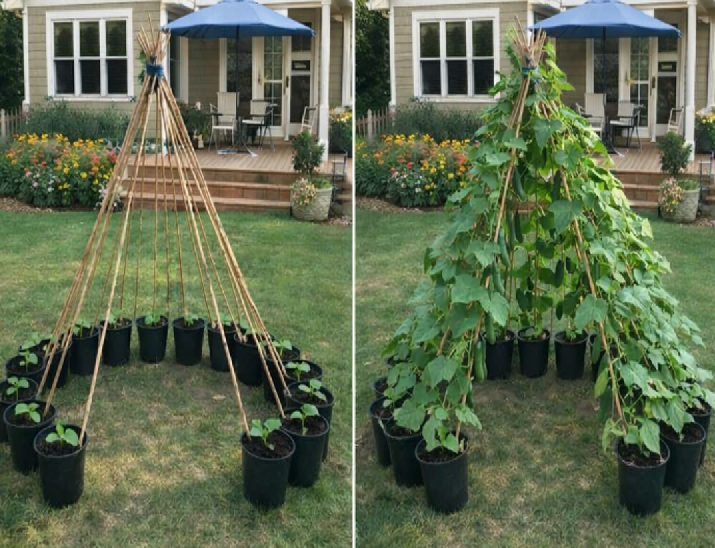
One of the most effective methods is using a bamboo teepee trellis combined with container planting. This approach blends functionality, space efficiency, and aesthetic appeal — making it ideal for modern backyard gardening.
Why Vertical Gardening Is a Game-Changer
Traditional cucumber plants spread horizontally and quickly take over available space. Vertical training completely changes the equation.
Key Advantages:
1.Space Optimization
Growing upward allows you to cultivate multiple plants in a compact footprint.
2.Healthier Plants
Improved air circulation reduces fungal diseases and pest pressure.
3.Cleaner Harvest
Fruits hang freely instead of resting on soil, resulting in straighter, cleaner cucumbers.
4.Easier Maintenance
Watering, pruning, and harvesting become significantly more convenient.
Why Growing Cucumbers in Pots Works So Well
Container gardening offers control that in-ground planting often cannot match.
Soil quality is fully customizable
Drainage is easier to manage
Nutrient schedules are more precise
Plants can be repositioned for optimal sunlight
Using large containers (15–20 liters minimum) ensures strong root development and stable moisture levels.
How to Build a Bamboo Teepee Trellis
This structure is simple, affordable, and highly effective.
Materials:
8–10 bamboo poles (approximately 180–200 cm tall)
Durable garden twine
Large planting pots
High-quality vegetable soil mix
Cucumber seedlings
Organic fertilizer
Construction Steps:
Arrange the pots in a circular formation.
Insert bamboo poles at an angle in each pot.
Bring the tops together and secure tightly with twine.
Plant one cucumber seedling per pot.
Guide vines upward as they begin to grow.
Within a few weeks, vines will naturally climb the structure, gradually forming a dense green pyramid.
The Aesthetic Advantage: Edible Landscaping
A vertical cucumber structure does more than produce food — it acts as a living garden feature.
When fully developed, it becomes:
A natural green focal point
A decorative backyard centerpiece
A shaded micro-zone beneath the foliage
The combination of greenery, structure, and symmetry transforms a functional vegetable setup into a design element.
The Hidden Benefit: Natural Cooling Effect
As vines mature and foliage thickens, the structure creates partial shade around the base. This helps:
Reduce soil temperature
Minimize evaporation
Protect roots during hot summer days
This natural microclimate improves plant resilience and reduces watering frequency.
Who Should Try This?
This method is perfect for:
Small backyard owners
Urban gardeners
Beginners looking for a simple project
Anyone wanting a high-impact, low-cost upgrade
It requires minimal tools, moderate effort, and delivers both visual and edible rewards.
You don’t need expansive land to create a productive and attractive garden space. A well-designed vertical structure, quality soil, and consistent care can produce impressive results in a compact area.
Smart structure + controlled growing conditions + vertical training = maximum efficiency.
If you’re planning your next backyard improvement, this approach offers one of the highest returns on effort you can achieve in home gardening

Add comment