

 wawstock
Lavender is one of the most beautiful and versatile plants in any garden—known for its soothing fragrance, beautiful purple blooms, and low-maintenance nature. However, to keep your lavender healthy, compact, and blooming year after year, proper pruning is essential. Done correctly, pruning encourages fuller growth, prevents woody stems, and extends the plant’s lifespan.
Why Pruning Lavender Matters
Lavender naturally tends to become woody and sparse over time. Without regular pruning, plants can grow leggy, produce fewer flowers, and even split apart. Pruning helps to:
Promote bushier, more compact growth
Increase flower production
Prevent woody, brittle stems
Extend the plant’s overall life
When to Prune Lavender
Timing is key when it comes to pruning lavender. There are generally two main pruning periods:
1.After the First Bloom (Late Spring to Early Summer)
Once the first flush of flowers fades, lightly prune the plant. This encourages a second bloom later in the season.
Cut back flower stems just above the leaves
Shape the plant into a neat mound
2.After the Final Bloom (Late Summer to Early Fall)
This is the more important pruning session.
Trim the plant more thoroughly to maintain shape
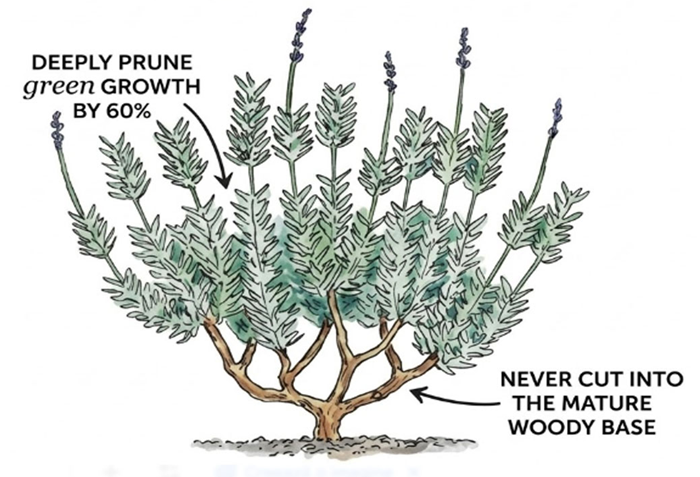
Remove about one-third of the plant’s growth
Avoid cutting into the woody base
Important: Stop pruning at least 6–8 weeks before the first frost to avoid stressing the plant before winter.
How to Prune Lavender Properly
Follow these steps for effective pruning:
Step 1:Use the Right Tools
Use clean, sharp pruning shears to make precise cuts and prevent disease.
Step 2:Identify New Growth
Focus on the soft, green stems. Avoid cutting into the woody parts, as lavender struggles to regrow from old wood.
Step 3:Cut Strategically
Trim about 1/3 of the plant’s height
Always leave at least 1–2 inches of green growth above the woody base
Shape into a rounded mound to promote even growth
Step 4:Remove Dead or Damaged Growth
Cut away any dry, brittle, or dead branches to keep the plant healthy.
Tips for Best Results
Young plants need light pruning; mature plants can handle more shaping
Never cut all the way down to the woody base
Harvesting flowers regularly also acts as a form of pruning
Different varieties (English, French, Spanish) may vary slightly in timing, but the general rules apply
Common Mistakes to Avoid
Over-pruning: Cutting too much can shock the plant
Pruning too late: This can leave the plant vulnerable to frost damage
Ignoring woody growth: Once lavender becomes too woody, it’s harder to rejuvenate
Pruning lavender isn’t complicated, but consistency is key. With just a couple of well-timed trims each year, you can keep your plants lush, fragrant, and full of blooms. Think of pruning as a way to guide your lavender into its best shape—both visually and biologically.
With the right care, your lavender will reward you with beauty and fragrance for many seasons to come.

Add comment