

 wawstock
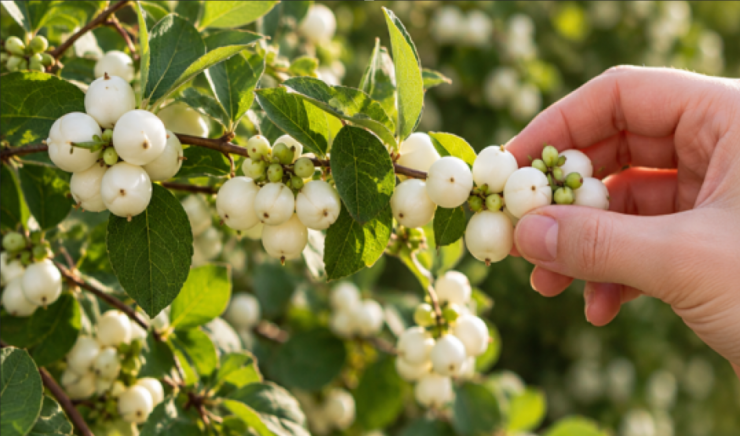
Have you ever noticed a shrub covered in small, round, snow-white berries? This unusual plant is called snowberry (Symphoricarpos albus), and it has a fascinating history that goes far beyond its ornamental beauty.
While most people admire its delicate white berries, few realize that snowberry contains naturally occurring compounds called saponins, which can produce a soap-like effect when mixed with water.
Snowberry is a hardy deciduous shrub native to North America. It grows in forests, along woodland edges, and in gardens.
Its distinctive white berries often remain on the branches after the leaves have fallen, making it especially attractive during autumn and winter.
The plant also provides shelter and food for certain wildlife species.
Snowberries contain saponins, naturally occurring plant compounds that can create a mild foaming effect in water.
Historically, some Indigenous North American communities used crushed snowberries for cleansing purposes, including washing hair.
This traditional use is documented by the U.S. National Park Service. However, snowberry is not a proven or recommended modern laundry detergent. Its berries can be toxic if swallowed, and their cleaning effectiveness and safety for fabrics have not been adequately established.
Traditional Uses of Snowberry
Snowberry has a history of use in traditional practices, including:
Hair cleansing
External skin preparations
Traditional herbal remedies
Making small brooms from its branches
These historical uses are interesting, but they should not be interpreted as evidence that snowberry is safe for homemade medicinal or cosmetic preparations.
Homemade Soapberry Laundry Detergent
If you’re interested in making a plant-based laundry cleaner, use soapberries (Sapindus mukorossi) rather than white snowberries.
Soapberry shells contain saponins that act as natural surfactants, helping loosen certain types of dirt and oils.
Ingredients
5–6 dried soapberry shells (soap nuts)
500 ml water
A small saucepan
A fine strainer
A clean container
How to Make It
Place the dried soapberry shells in a saucepan.
Add 500 ml of water.
Bring to a gentle boil, then simmer for approximately 20 minutes.
Allow the liquid to cool completely.
Strain out the shells and transfer the liquid into a clean container.
Use the freshly prepared solution for experimenting with lightly soiled, washable fabrics, following their care instructions.
Because homemade soapberry liquid contains no preservative, prepare small quantities, refrigerate promptly, and discard leftovers after 24 hours. Do not store it at room temperature for extended periods.
Important: Soapberry solutions are not equivalent to formulated commercial laundry detergents. Their performance varies, and they may not adequately remove heavy stains or provide hygienic cleaning.
Even without using its berries for cleaning, snowberry offers several advantages:
Beautiful white berries in autumn and winter
Tolerance of different soil conditions
Good adaptability to partial shade
Wildlife habitat
Potential use in erosion-control planting
Its attractive berries make it a particularly interesting ornamental shrub.
Important Safety Warning
Snowberries are not edible. Keep the berries away from children and pets, and never use them to prepare drinks, food, or homemade laundry products.
Snowberry and soapberry are different plants, despite their similar names.
Snowberry is much more than a decorative shrub with unusual white berries.
Its history as a traditional cleansing plant and its naturally occurring saponins make it a fascinating example of how people once used plants in everyday life.
For homemade laundry experiments, however, soapberries are the more appropriate choice.

Add comment