

 wawstock
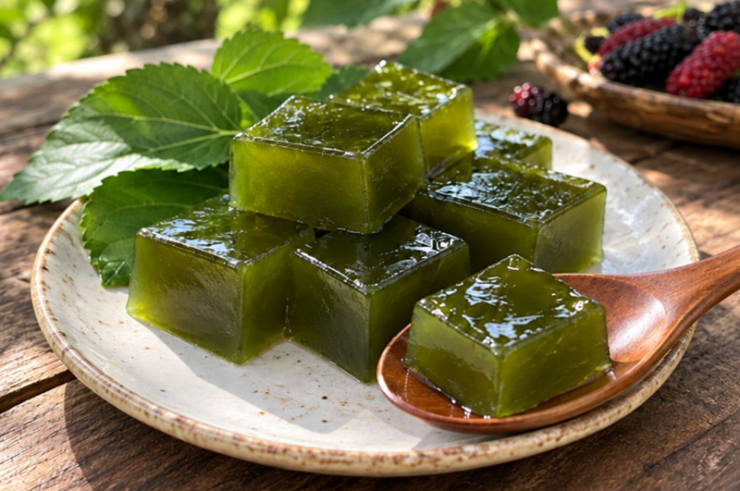
Most people know mulberry trees for their delicious, juicy fruits. But did you know that mulberry leaves can also be used to make a unique homemade jelly?
For generations, mulberry leaves have been used in traditional herbal teas, particularly in parts of Asia. Today, they’re gaining attention for their natural plant compounds and potential health benefits.
With a few simple ingredients, you can transform these ordinary green leaves into a delicate, lightly herbal jelly.
Mulberry leaves, particularly those from the white mulberry tree (Morus alba), contain several interesting nutrients and plant compounds.
They provide:
Antioxidants: Including flavonoids and other polyphenols.
Vitamins and minerals: Such as vitamin C, calcium, and potassium, although amounts vary.
Natural plant compounds: Including 1-deoxynojirimycin (DNJ), which has been studied for its effects on carbohydrate digestion.
Some research suggests that mulberry leaf extracts may influence blood sugar responses. However, evidence is still limited, and homemade mulberry leaf jelly should not be considered a treatment for diabetes or other medical conditions.
Homemade Mulberry Leaf Jelly Recipe
This refreshing jelly has a delicate herbal flavor and a beautiful light green or golden appearance, depending on the leaves and preparation method.
Ingredients
20–25 fresh, young mulberry leaves
500 ml water
2–3 tablespoons sugar or honey
10 g unflavored gelatin powder
3 tablespoons cold water for blooming the gelatin
1 tablespoon fresh lemon juice
Step-by-Step Instructions
Step 1: Collect the leaves
Choose fresh, healthy mulberry leaves from a correctly identified, unsprayed tree. Avoid leaves growing near busy roads or areas treated with pesticides.
Step 2: Wash and prepare
Rinse the leaves thoroughly under running water to remove dirt and insects.
Step 3: Make the mulberry leaf infusion
Bring 500 ml of water to a boil. Add the leaves, reduce the heat, and simmer gently for approximately 5–10 minutes.
Remove from the heat and allow the infusion to steep for another 5 minutes.
Step 4: Strain the liquid
Remove the leaves using a fine strainer. The remaining liquid will have a mild, earthy, herbal aroma.
Step 5: Add the sweetener
While the infusion is still warm, stir in the sugar or honey and lemon juice.
Step 6: Prepare the gelatin
Sprinkle the gelatin over 3 tablespoons of cold water and let it bloom for approximately 5 minutes.
Add it to the warm infusion and stir until completely dissolved. Avoid boiling the mixture after adding gelatin.
Step 7: Refrigerate
Pour the liquid into small bowls, glasses, or jelly molds.
Refrigerate for approximately 3–4 hours, or until completely set.
Your homemade mulberry leaf jelly is ready!
How to Enjoy Mulberry Leaf Jelly
This unusual homemade dessert can be enjoyed in several delicious ways:
As a refreshing dessert: Serve chilled with a little honey.
With fresh fruit: Combine with strawberries, peaches, or ripe mulberries.
In yogurt bowls: Cut the jelly into cubes and add them to plain yogurt.
In homemade drinks: Add small jelly cubes to iced herbal tea or fruit drinks.
With lemon: A little extra lemon juice can brighten its mild herbal flavor.
Unlike traditional fruit jam, this is a soft, gelatin-set dessert that must be kept refrigerated.
Potential Benefits of Mulberry Leaves
Antioxidant Properties
Mulberry leaves contain polyphenols that have demonstrated antioxidant activity in laboratory studies. These compounds are of interest for their possible contribution to a balanced diet.
Blood Sugar Research
Mulberry leaf extracts have been studied for their ability to slow the digestion of certain carbohydrates.
However, the amount of active compounds in homemade jelly is unknown, and the added sugar makes it unsuitable to describe as a blood-sugar-lowering dessert.
A Different Way to Use Garden Plants
Making jelly from mulberry leaves is a creative way to explore traditional plant ingredients without relying exclusively on the fruit.
Important Tips and Precautions
Use only correctly identified mulberry leaves from an edible Morus species.
Avoid leaves exposed to pesticides or pollution.
Start with a small serving, as mulberry leaves may cause digestive discomfort or allergic reactions in some people.
If you take diabetes medication, consult a healthcare professional before regularly consuming concentrated mulberry leaf preparations.
Keep the jelly refrigerated and consume within 2–3 days.
Do not attempt to preserve this gelatin-based recipe in sealed jars at room temperature.
Mulberry trees have much more to offer than their sweet summer berries.
Their leaves have a long history of traditional use, contain interesting natural compounds, and can be transformed into a refreshing homemade jelly.

Add comment