

 wawstock
Imagine growing fresh potatoes without digging, planting in garden beds, or using traditional soil!
It might sound impossible, but potatoes can grow in a soil-free environment using hydroponic growing techniques.
With a few simple materials, you can experiment with growing potato plants in containers, even if you don’t have a large garden.
But there’s an important secret: while potatoes can develop roots in water, producing a healthy harvest requires more than simply suspending a potato in a bottle.
Here’s how this fascinating growing method works!
1.Can Potatoes Really Grow Without Soil?
Yes! Potatoes can be grown using hydroponics, a technique in which plants receive essential nutrients through water rather than ordinary garden soil.
Potato plants develop two important structures:
Roots, which absorb water and nutrients.
Stolons, specialized underground stems that produce new potato tubers.
Unlike many leafy vegetables, potatoes need enough space and suitable conditions for their tubers to develop.
That’s why a proper hydroponic system uses a growing container and an aerated nutrient solution rather than just a jar of plain water.
2.What You’ll Need
To try growing potatoes without soil, prepare:
Certified disease-free seed potatoes
A large, opaque container or bucket
A net pot or suitable planting basket
Coco coir, perlite, or another clean growing medium
Hydroponic nutrient solution
Clean water
An aquarium air pump and air stone
A sunny location or suitable grow light
Gardening tip: Recycled plastic bottles can be useful for sprouting potatoes, but larger containers are better for growing mature plants and producing tubers.
3.How to Start Potatoes in Water
The first step is encouraging healthy sprouts and roots.
Step 1: Choose a healthy seed potato with visible eyes.
Step 2: Allow the potato to develop short, sturdy sprouts in a bright, cool location.
Step 3: Position it above a container of water so only the lower portion is near or lightly touching the water.
Step 4: Keep the container in a bright location away from excessive heat.
Step 5: Change the water regularly and watch for root development.
After several days or weeks, roots and green shoots may begin appearing.
Important: This is mainly a sprouting experiment. Plain water alone will not provide the nutrients needed for a reliable potato harvest.
4.Transfer Your Potato to a Hydroponic System
Once your potato develops healthy roots and shoots, transfer it into a larger growing setup.
Fill a net pot or planting basket with coco coir or perlite.
Position the sprouted seed potato securely in the growing medium.
Place the basket above a reservoir containing hydroponic nutrient solution.
Ensure the roots can reach the solution while the seed potato and developing tubers remain out of standing water.
Use an air pump to provide oxygen to the nutrient solution.
Keep the container covered to prevent light from reaching the developing tubers.
Potatoes need adequate nutrients, oxygen, and growing space to develop successfully.
5.How to Care for Hydroponic Potatoes
For healthy growth, pay attention to a few essential factors.
Sunlight: Provide approximately 6–8 hours of direct sunlight or sufficient artificial growing light.
Water: Maintain a consistent water level without submerging the developing tubers.
Nutrients: Use a complete hydroponic fertilizer according to the manufacturer’s instructions.
Temperature: Potatoes generally grow well in mild conditions, with cooler temperatures favoring tuber development.
Air circulation: Good airflow helps reduce fungal problems.
Light protection: Keep developing potatoes in darkness to prevent greening.
Monitor the nutrient solution regularly and replace it as needed.
6.How Long Does It Take to Grow Potatoes?
Depending on the variety and growing conditions, potatoes may be ready to harvest in approximately 70–120 days.
Early varieties can produce small new potatoes sooner, while maincrop varieties usually require more time.
When the plants begin yellowing naturally and the tubers have reached a suitable size, harvesting can begin.
Carefully remove the growing medium and collect the potatoes without damaging them.
7.Common Mistakes to Avoid
Using only plain water: Potatoes need essential nutrients for sustained growth and tuber production.
Choosing containers that are too small: Limited growing space can reduce the harvest.
Submerging the tubers: Constant contact with water can encourage rotting.
Allowing sunlight onto developing potatoes: Light exposure can cause greening and increase glycoalkaloid levels.
Poor oxygen supply: Roots need oxygen to remain healthy.
Using unhealthy supermarket potatoes: Certified seed potatoes reduce the risk of introducing plant diseases.
8.Is Growing Potatoes Without Soil Worth Trying?
Hydroponic potato growing can be an interesting project for gardeners who enjoy experimenting with unusual cultivation methods.
It offers several potential advantages:
No traditional garden soil required.
Greater control over water and nutrient delivery.
An opportunity to grow plants in limited spaces.
A fascinating way to observe root development.
Less exposure to some soil-borne problems when using clean materials.
However, growing potatoes hydroponically is generally more complicated than growing them in soil or containers filled with compost.
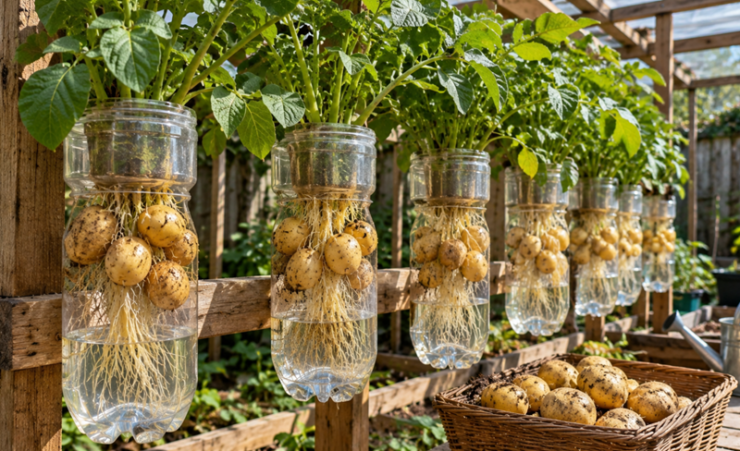
The large harvest shown in the picture should be considered illustrative rather than a typical result from hanging plastic bottles.
Growing potatoes without soil is possible, and hydroponics offers an exciting alternative to traditional gardening.
While a simple plastic bottle can help you observe potato roots and sprouts, producing a successful harvest requires a larger container, proper nutrients, oxygen, and enough room for tubers to develop.
With the right setup and a little patience, you can experiment with growing your own potatoes in an entirely different way.

Add comment