

 wawstock
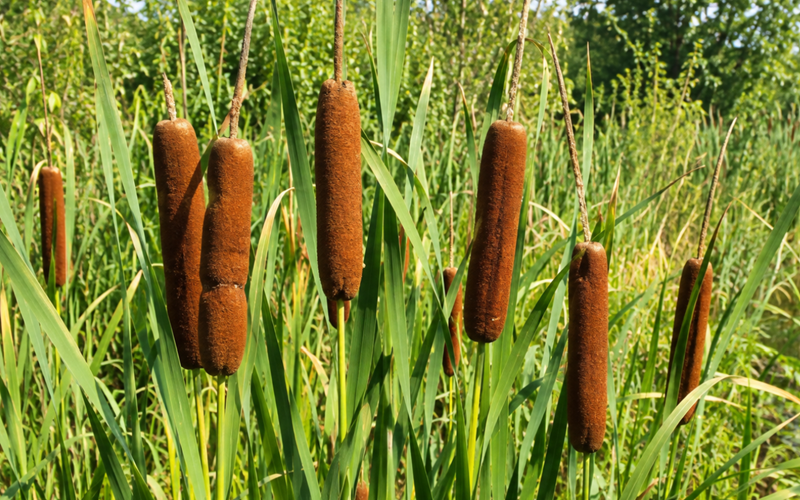
You’ve probably seen them growing beside ponds, lakes, and marshes — tall green plants topped with distinctive brown, sausage-shaped flower spikes.
These fascinating plants are called cattails (Typha spp.), and they’re much more useful than most people realize!
For centuries, cattails have provided food, weaving materials, and other practical resources for communities around the world.
From edible shoots to natural basket-making materials, here are eight remarkable benefits and uses of cattails.
1.Young Cattail Shoots Are Edible
In spring, cattails produce tender young shoots that have traditionally been eaten as a wild vegetable.
The pale inner portions can be peeled, cooked, and served similarly to asparagus.
Their mild flavor makes them suitable for soups, stir-fries, and vegetable dishes.
Important: Harvest only from clean, uncontaminated water and positively identified plants.
2.Cattail Pollen Can Be Used in Cooking
During early summer, male cattail flower spikes release bright yellow pollen.
This pollen can be collected and mixed with ordinary flour to make pancakes, muffins, or bread.
It adds a golden color and an interesting flavor to homemade recipes.
Because pollen may trigger allergies, sensitive individuals should avoid it.
3.Cattail Rhizomes Contain Starch
Beneath the muddy soil, cattails develop thick underground stems called rhizomes.
These contain starch that has historically been extracted and used as a food ingredient.
However, processing is labor-intensive, and wetland plants can accumulate contaminants. Wild rhizomes should never be eaten without expert identification and appropriate preparation.
4.Cattail Leaves Are Excellent for Basket Weaving
One of the oldest traditional uses of cattails is making practical household objects.
Their long, flexible leaves can be dried and woven into:
- Baskets
- Mats
- Chair seats
- Decorative crafts
- Traditional containers
This makes cattails a fascinating source of natural crafting materials.
5.Cattail Fluff Has Traditional Practical Uses
When mature cattail seed heads break apart, they release masses of soft, fluffy material.
Historically, this fluff has been used as stuffing for cushions, bedding, and other handmade items.
However, cattail fluff is highly flammable and should never be used near open flames or as a substitute for certified fire-safe insulation.
6.Cattails Help Support Wetland Wildlife
Cattails are important plants in many freshwater ecosystems.
Their dense stands provide shelter and nesting habitat for birds, amphibians, insects, and other wildlife.
Their roots and stems also contribute to the structure of wetland habitats.
7.Cattails Can Help Improve Water Quality
Cattails absorb nutrients such as nitrogen and phosphorus from their surroundings.
For this reason, they are sometimes used in constructed wetlands designed to treat wastewater.
However, cattails can also accumulate pollutants, including certain heavy metals.
Never harvest cattails for food from drainage ditches, industrial areas, or polluted waterways.
8.Cattails Have a History of Traditional Medicinal Uses
Various parts of cattails have been used in traditional healing practices, including preparations applied externally.
Some laboratory studies have investigated their antioxidant and other biological properties.
However, reliable human clinical evidence is limited, and cattails should not be considered a proven treatment for wounds, infections, or other medical conditions.
Where Can You Find Cattails?
Cattails commonly grow in shallow freshwater environments, including:
- Ponds and lakeshores
- Marshes and wetlands
- Slow-moving waterways
- Shallow freshwater ditches
They are recognizable by their long, narrow leaves and characteristic brown cylindrical flower spikes.
Safety reminder: Young cattails can resemble dangerous wetland plants, including poisonous irises. Never forage based on appearance alone. Seek expert identification and check local harvesting regulations.
Cattails are much more than ordinary marsh plants.
Their edible young shoots, useful pollen, starchy rhizomes, weaving materials, and ecological benefits make them one of the most versatile plants found in wetlands.
Although proper identification and clean harvesting locations are essential, cattails offer a fascinating example of how valuable overlooked wild plants can be.

Add comment