

 wawstock
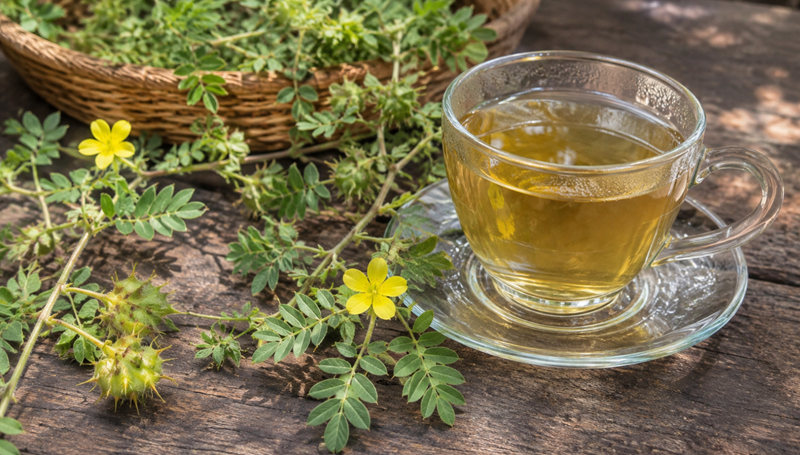
Growing in dry fields, roadsides, and sunny landscapes, Tribulus terrestris, also known as puncture vine or goat’s head, is a small wild plant with yellow flowers, delicate leaves, and distinctive spiny fruits.
Although many people consider it a troublesome weed, Tribulus has a long history of use in traditional herbal medicine, particularly in Ayurveda and traditional Chinese medicine.
But what makes this plant interesting, and what should you know before drinking its tea?
5 Potential Benefits and Traditional Uses of Tribulus Tea
1.Traditionally used for urinary health
Tribulus has historically been used as a diuretic to encourage urine production. However, reliable human studies confirming the effectiveness and safety of Tribulus tea for urinary conditions are limited.
2.Contains natural antioxidant compounds
The plant contains flavonoids, saponins, and other phytochemicals with antioxidant activity observed in laboratory research. Their effects when consumed as tea are not well established.
3.Traditionally associated with vitality
Tribulus is commonly marketed for energy, stamina, and physical performance. However, scientific evidence does not consistently support these claims.
4.Studied for sexual wellness
Some studies have investigated Tribulus extracts for sexual function and libido, with mixed results. These findings cannot automatically be applied to homemade tea, and there is no convincing evidence that Tribulus reliably increases testosterone.
5.Investigated for metabolic health
Preliminary studies have explored possible effects on blood sugar and other metabolic markers, but more research is needed before Tribulus can be recommended for these purposes.
How to Make Tribulus Tea
Tribulus tea has traditionally been prepared from dried aerial parts of the plant, including leaves and stems.
What you’ll need:
- Dried, correctly identified Tribulus terrestris
- Hot water
- A tea strainer
- Honey or lemon, if desired
Preparation:
- Obtain properly identified, food-grade dried Tribulus from a reputable herbal supplier.
- Place the herb in a tea infuser or heat-resistant cup.
- Pour hot water over the herb and cover.
- Allow it to steep for approximately 5–10 minutes.
- Strain and serve.
There is no well-established safe or effective dosage for homemade Tribulus tea, so this preparation method should not be interpreted as a recommendation to consume it regularly.
Important Safety Precautions
Tribulus is not suitable for everyone. Adverse effects and rare reports of liver or kidney injury have been associated with Tribulus-containing preparations.
Avoid it during pregnancy or breastfeeding. People with kidney or liver disease, or those taking medications for blood pressure or diabetes, should seek medical advice before using it.
Never collect an unfamiliar wild plant for consumption, and be especially careful with the sharp, spiny fruits.
Tribulus terrestris is a fascinating wild plant with centuries of traditional use and several interesting natural compounds.
Although its potential benefits continue to attract scientific attention, traditional use is not the same as proven medical effectiveness.

Add comment