

 wawstock
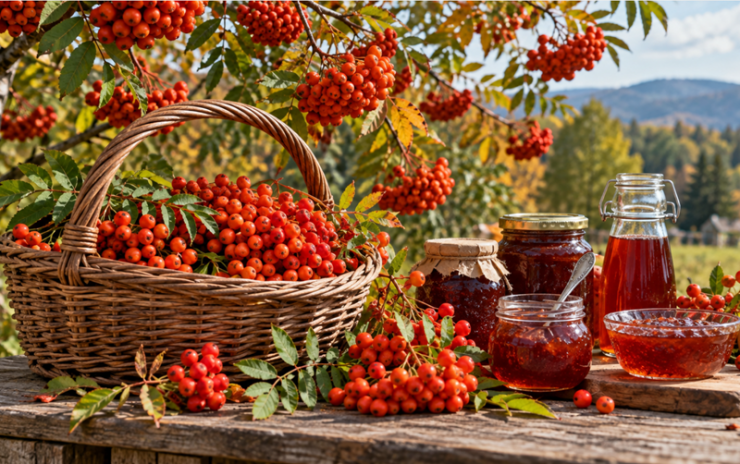
Every autumn, mountain ash trees become covered in beautiful clusters of bright orange-red berries. Many people admire their colors without realizing that these little fruits have been used for generations in traditional European recipes.
Known as rowanberries, the fruits of the European mountain ash (Sorbus aucuparia) have a distinctive tart, bitter flavor and contain interesting natural plant compounds.
With proper preparation, they can be transformed into delicious jams, jellies, syrups, and other homemade treats.
Here are eight wonderful ways to use rowanberries!
1.Rowanberry Jelly
One of the most popular traditional uses for rowanberries is making homemade jelly.
Their tart flavor pairs beautifully with roasted meats, cheeses, and savory dishes.
Easy recipe:
500 g prepared rowanberries
2 apples, chopped
600 ml water
Sugar, measured according to the strained juice
Simmer the berries and apples until soft, strain through a jelly bag, and measure the juice. Add approximately 750 g sugar per liter of juice, then boil until the jelly reaches its setting point.
For shelf-stable preservation, use a tested canning recipe. Otherwise, refrigerate the jelly.
2.Homemade Rowanberry Jam
Rowanberries can also be turned into a flavorful autumn jam.
Because they are naturally bitter, they are often combined with sweeter fruits such as apples or pears.
Cook the prepared berries with chopped apples, sugar, and a little water until soft and thick.
The result is a rich, tangy spread that’s delicious on toast or served with cheese.
3.Rowanberry Syrup
A homemade rowanberry syrup is a wonderful way to capture the flavors of autumn.
Simmer the berries in water, strain the liquid, and sweeten with sugar.
The syrup can be used in small amounts to flavor sparkling water, desserts, or homemade mocktails.
Keep homemade syrup refrigerated and use it promptly unless following a tested preservation method.
4.Rowanberry Chutney
If you enjoy sweet-and-sour flavors, rowanberry chutney is worth trying.
Combine prepared rowanberries with apples, onions, vinegar, sugar, and warming spices.
Cook until the mixture becomes thick and aromatic.
This traditional-style condiment pairs beautifully with roasted vegetables, cheese, and savory meals.
5.Rowanberry Sauce
Rowanberries can be used to create a tangy sauce similar to cranberry sauce.
Simply simmer prepared berries with apples, sugar, and a little water until softened.
Serve alongside roasted meats, vegetarian dishes, or autumn meals.
Their slightly bitter flavor adds a distinctive touch to savory recipes.
6.Rowanberry Fruit Leather
Another creative way to use rowanberries is by making homemade fruit leather.
Cook the berries thoroughly, combine them with sweet apple purée, and blend until smooth.
Spread the mixture thinly on a dehydrator tray and dry until flexible and no longer sticky.
This creates a tangy fruit snack with a beautiful autumn color.
7.Rowanberry Compote
A warm rowanberry compote makes a delicious topping for pancakes, oatmeal, or yogurt.
Combine prepared berries with apples or pears, add a little sugar, and simmer until tender.
The natural tartness of rowanberries balances the sweetness of other fruits.
Serve chilled or warm.
8.Rowanberry Vinegar
Rowanberries can also be used to flavor vinegar.
Add thoroughly cooked, cooled berries to a clean jar, cover with commercial food-grade vinegar, and refrigerate while the flavors infuse.
Strain before using.
The resulting flavored vinegar can add an interesting fruity note to salad dressings and marinades.
Do not assume homemade infused vinegar is shelf-stable without a tested recipe.
When and Where to Harvest Rowanberries
Mountain ash trees are commonly found in woodlands, parks, gardens, and mountainous regions across Europe.
Their berries typically ripen from late summer through autumn, turning bright orange or red.
For the best harvest:
Choose fully ripe berries from correctly identified trees.
Collect from clean areas away from busy roads and pesticides.
Avoid damaged, moldy, or spoiled fruit.
Leave some berries for birds and other wildlife.
Wash the berries thoroughly before preparation.
Some gardeners prefer harvesting after a light frost because the berries may taste less bitter. Freezing can also soften the fruit, but it does not replace proper cooking.
Are Rowanberries Healthy?
Rowanberries contain several naturally occurring nutrients and plant compounds, including:
Vitamin C, although cooking can reduce its concentration.
Polyphenols, which have antioxidant activity in laboratory studies.
Dietary fiber, particularly when the fruit pulp is consumed.
Carotenoids, responsible for some of their attractive orange-red color.
However, these compounds do not make rowanberries a proven treatment for medical conditions.
Important Safety Tips
Raw European rowanberries contain parasorbic acid, which can cause digestive irritation, nausea, and vomiting.
Always cook rowanberries thoroughly before eating them. Freezing alone should not be relied upon to make them safe.
Only use berries from a correctly identified edible Sorbus species, and never consume unknown wild berries.
Mountain ash berries are one of autumn’s most overlooked natural ingredients.
From delicious homemade jelly and jam to flavorful chutney, syrup, and fruit leather, these colorful berries offer plenty of creative possibilities in the kitchen.
Their beautiful appearance, distinctive flavor, and traditional culinary history make them a fascinating seasonal ingredient.

Add comment