

 wawstock
Love houseplants but always forget to water them? Good news! Some of the most beautiful indoor plants are also incredibly easy to maintain.
Certain houseplants naturally store water in their leaves, stems, or roots, allowing them to survive long periods without watering.
Some can go approximately 3–4 weeks or even longer between waterings, especially during winter or when growing in cooler indoor conditions.
Here are 12 beautiful, low-maintenance houseplants that are perfect for busy people and beginners!
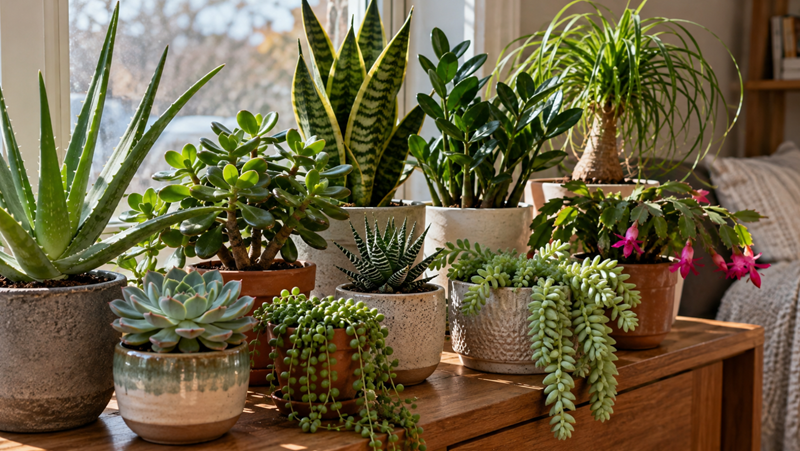
1.Snake Plant (Dracaena trifasciata)
One of the toughest houseplants you can grow!
Snake plants have thick, upright leaves that store moisture, allowing them to tolerate dry conditions.
Watering: Approximately every 3–4 weeks, sometimes less frequently in winter.
Light: Bright, indirect light, but tolerates lower light levels.
2.ZZ Plant (Zamioculcas zamiifolia)
The ZZ plant is famous for its glossy green leaves and remarkable drought tolerance.
Its underground rhizomes store water, helping it survive extended dry periods.
Watering: Approximately every 3–4 weeks.
Light: Low to bright, indirect light.
3.Aloe Vera (Aloe barbadensis Miller)
Aloe vera is a beautiful succulent with thick, fleshy leaves that store water.
It’s an excellent choice for sunny windowsills.
Watering: Every 3–4 weeks, once the soil has dried thoroughly.
Light: Bright light, with some direct sunshine.
4.Jade Plant (Crassula ovata)
Jade plants are popular succulents known for their thick, oval-shaped leaves and tree-like appearance.
With proper care, they can live for many years.
Watering: Approximately every 3–4 weeks, depending on temperature and growth.
Light: Bright light, including some direct sunlight.
5.Ponytail Palm (Beaucarnea recurvata)
Despite its name, the ponytail palm isn’t a true palm.
Its swollen trunk stores water, making it particularly resistant to drought.
Watering: Approximately every 3–4 weeks or longer when conditions are cool.
Light: Bright light and some direct sunlight.
6.Haworthia (Haworthiopsis attenuata)
This compact succulent has attractive pointed leaves decorated with white stripes.
It’s perfect for desks, shelves, and small indoor spaces.
Watering: Every 3–4 weeks after the potting mix has dried.
Light: Bright, indirect light.
7.Echeveria (Echeveria spp.)
Echeverias are famous for their beautiful rosette-shaped leaves in shades of green, blue, pink, and purple.
Their fleshy leaves help them tolerate periods of drought.
Watering: Approximately every 2–4 weeks.
Light: Very bright light, preferably with some direct sunshine.
8.String of Pearls (Curio rowleyanus)
This unusual succulent has long trailing stems covered in tiny, round leaves resembling green pearls.
Those little spheres store moisture.
Watering: Approximately every 2–4 weeks, depending on conditions.
Light: Bright, indirect light with gentle direct sun.
9.Burro’s Tail (Sedum morganianum)
Burro’s Tail is a beautiful trailing succulent with plump, blue-green leaves.
It looks spectacular in hanging baskets.
Watering: Approximately every 3–4 weeks when the soil is completely dry.
Light: Bright light with some gentle sunshine.
10.Lithops (Living Stones)
Lithops are fascinating little succulents that resemble colorful pebbles.
They have extremely specialized watering needs and can survive long periods without water.
Watering: Highly seasonal. During certain growth stages, they may need no water for several months.
Light: Very bright light.
Important: Lithops should not be watered on a fixed monthly schedule, especially during leaf replacement.
11.Christmas Cactus (Schlumbergera spp.)
Christmas cactus produces beautiful flowers in shades of pink, red, white, and purple.
Unlike desert cacti, it naturally grows in more humid environments.
Watering: Often every 1–2 weeks during active growth, but less frequently during cool, slower-growing periods.
Light: Bright, indirect light.
Although relatively low-maintenance, it generally needs more frequent watering than desert succulents.
12.Zebra Plant (Haworthiopsis fasciata)
This small succulent features dark green leaves with distinctive white horizontal bands.
It’s an excellent choice for anyone who wants a compact, easy-care plant.
Watering: Approximately every 3–4 weeks after the soil dries.
Light: Bright, indirect sunlight.
The Secret to Keeping Drought-Tolerant Houseplants Healthy
Even plants that tolerate long periods without water need proper care.
Follow these simple tips:
Check the soil before watering: Don’t water simply because a certain number of days has passed.
Use pots with drainage holes: Standing water can cause root rot.
Choose well-draining soil: Cactus and succulent mixes work well for many of these plants.
Adjust watering during winter: Most plants use less water when growth slows.
Consider your environment: Small pots, warm rooms, and strong sunlight can make soil dry faster.
Remember: A plant’s ability to survive drought doesn’t mean it should always be left without water for an entire month. Watering frequency depends on the species, pot size, soil, temperature, and light conditions.
You don’t need to be an experienced gardener to enjoy beautiful indoor plants.
From the elegant Snake Plant and glossy ZZ Plant to the unusual Lithops and trailing String of Pearls, these 12 houseplants offer wonderful variety without demanding constant attention.
Many can tolerate several weeks between waterings, making them ideal for busy lifestyles.

Add comment