

 wawstock
Imagine stepping into your garden in the middle of winter and finding fresh lettuce, leafy greens, and healthy vegetables growing beneath a transparent roof.
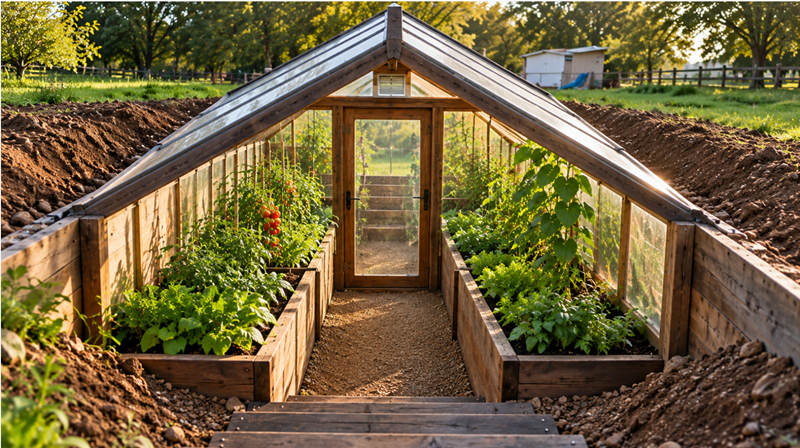
It might sound surprising, but this is the idea behind a Walipini greenhouse, an underground growing structure designed to take advantage of the earth’s natural insulation.
While traditional greenhouses sit entirely above ground, a Walipini is built partially or mostly below ground level, helping protect plants from extreme outdoor temperatures.
Here’s why this fascinating gardening technique is attracting attention!
1.What Is a Walipini Greenhouse?
The word Walipini comes from the Aymara language and is commonly translated as “place of warmth.”
A Walipini greenhouse is essentially a sunken greenhouse with insulated or earth-supported walls and a transparent roof that allows sunlight to reach the plants.
The surrounding soil helps moderate temperature fluctuations, keeping the growing environment more stable than the outside air.
This design can be particularly useful in regions with cold winters and plenty of winter sunshine.
2.Why Are Underground Greenhouses So Interesting?
Unlike ordinary greenhouses, Walipini structures benefit from the thermal mass of the surrounding ground.
Some potential advantages include:
Better temperature stability: The earth helps reduce rapid temperature changes.
Protection from cold winds: Much of the growing area sits below ground level.
Extended growing seasons: Suitable crops may continue growing when outdoor conditions are unfavorable.
Potential energy savings: Passive solar heating can reduce the need for supplemental heat.
Efficient garden space: Raised beds can be arranged along a central walkway.
However, year-round growing is not guaranteed. Results depend on climate, sunlight, insulation, ventilation, and greenhouse design.
3.How to Build a Simple Walipini Greenhouse
Building a Walipini requires careful planning, but the basic concept is straightforward.
Step 1: Choose the right location
Select a sunny area with good drainage and a low risk of flooding.
In the Northern Hemisphere, the transparent roof should generally be designed to capture as much southern winter sunlight as possible.
Step 2: Plan the excavation
A Walipini typically includes a sunken growing area with space for raised beds and a central walkway.
The depth depends on the site, soil conditions, and structural design.
Step 3: Construct safe retaining walls
The surrounding earth must be supported by properly designed retaining walls capable of resisting soil and water pressure.
Never enter an unsupported excavation. Wall design, drainage, and excavation safety should be assessed by qualified professionals.
Step 4: Install a transparent roof
Use greenhouse-grade polycarbonate or another suitable transparent material supported by a properly engineered frame.
The roof should be designed for local snow and wind loads.
Step 5: Add raised garden beds
Build growing beds along the sides, leaving enough room for a comfortable walkway.
Step 6: Provide ventilation and drainage
Install vents or windows to prevent overheating and excess humidity.
Effective drainage is essential because below-ground structures can collect groundwater and rainwater.
4.What Can You Grow in a Walipini Greenhouse?
One of the most exciting aspects of this greenhouse design is the possibility of growing fresh vegetables beyond the traditional outdoor season.
Some suitable crops include:
Lettuce: Ideal for cooler growing conditions.
Spinach: A productive cold-season vegetable.
Kale: Tolerates relatively low temperatures.
Radishes: Fast-growing and perfect for small beds.
Parsley and cilantro: Useful herbs for cooler conditions.
Swiss chard: A nutritious leafy green.
Tomatoes, peppers, and cucumbers may also grow successfully during warmer periods, but they require more heat and light.
In colder climates, these summer vegetables may need supplemental heating and lighting during winter.
5.The Secret to Keeping a Walipini Productive
A successful underground greenhouse needs more than just a transparent roof.
Sunlight: Make sure nearby buildings and trees don’t block valuable winter sunshine.
Ventilation: Even in cold weather, sunny days can cause greenhouse temperatures to rise quickly.
Watering: Water according to the needs of your plants and avoid excessive humidity.
Drainage: Keep groundwater and surface runoff away from the structure.
Temperature monitoring: Use a thermometer to track daytime and nighttime conditions.
Crop selection: Choose vegetables suited to the amount of natural light and warmth available.
These simple practices can make a major difference in the success of your greenhouse.
6.Is a Walipini Better Than a Traditional Greenhouse?
Both designs have advantages.
A traditional greenhouse is usually easier to build, relocate, and maintain. It also offers greater flexibility in areas with difficult soil or high groundwater.
A Walipini may provide better protection from wind and more stable temperatures, but excavation, retaining walls, drainage, and roof construction can make it more expensive and complicated.
The best option depends on your climate, available space, budget, and growing goals.
The Walipini greenhouse is a fascinating example of how clever design can work with nature to create better growing conditions.
By combining underground insulation with natural sunlight, gardeners may be able to extend their growing season and enjoy fresh vegetables for more months of the year.
Although it requires proper construction and planning, this unusual greenhouse design offers an inspiring alternative to traditional gardening.


Add comment