

 wawstock
October is one of the most exciting months for mushroom enthusiasts. As temperatures drop and autumn rains soak the forest floor, an incredible variety of fungi begins to appear among fallen leaves, moss, and decaying wood.
From delicious wild mushrooms to brilliantly colored species that look almost magical, autumn forests are full of fascinating discoveries.
Here are nine remarkable fungi you might encounter during an October woodland walk, including where they grow, what makes them special, and whether they are edible.
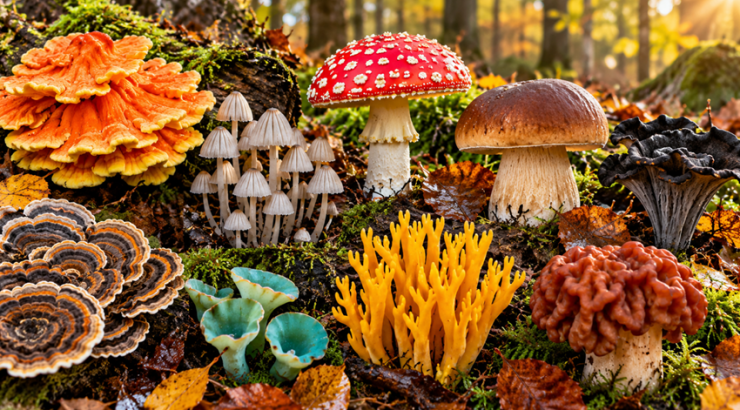
1.Chicken of the Woods (Laetiporus sulphureus)
Where to find it: On living or dead hardwood trees, especially oak, and on fallen logs.
Chicken of the Woods is famous for its bright orange and yellow shelves, which can resemble layers of colorful fans.
Its name comes from its firm texture, which some people compare to cooked chicken.
Edibility: Considered edible when correctly identified and thoroughly cooked, although some people experience digestive discomfort or allergic reactions.
2.Fairy Inkcap (Coprinellus disseminatus)
Where to find it: Around decaying tree stumps, buried wood, and fallen branches.
These tiny, delicate mushrooms often grow in enormous clusters, creating a miniature forest of pale gray or cream-colored caps.
Their fragile appearance makes them particularly beautiful to photograph.
Edibility: Not recommended for eating because of their small size and limited culinary value.
3.Fly Agaric (Amanita muscaria)
Where to find it: In woodlands, often near birch, pine, and spruce trees.
With its brilliant red cap and white spots, Fly Agaric is one of the world’s most recognizable mushrooms.
It has appeared in fairy tales, folklore, and illustrations for centuries.
Edibility: Poisonous. It contains psychoactive toxins and can cause serious illness. Never eat it.
4.Black Trumpet (Craterellus cornucopioides)
Where to find it: In deciduous forests, particularly near beech and oak trees, often among damp leaf litter.
Black Trumpets are dark, funnel-shaped mushrooms that can be surprisingly difficult to spot against the forest floor.
Despite their unusual appearance, they are highly valued for their rich, earthy flavor.Edibility: Edible when correctly identified and properly prepared. Often dried and used in soups, sauces, and pasta dishes.
5.Penny Bun (Boletus edulis)
Where to find it: In forests near spruce, pine, oak, beech, and other compatible trees.
Also known as porcini or cep, Penny Bun is one of the most prized wild mushrooms in European cuisine.
Its thick stem, brown cap, and rich nutty flavor make it a favorite among mushroom lovers.
Edibility: An excellent edible species when positively identified. It can be cooked fresh or dried for later use.
6.Yellow Stagshorn (Calocera viscosa)
Where to find it: On decaying conifer wood, including buried roots and rotting stumps.
This unusual fungus looks like tiny golden antlers rising from the forest floor.
Its bright yellow-orange color makes it stand out beautifully against green moss.
Edibility: Not recommended for consumption. Its tough, gelatinous texture offers little culinary value.
7.Turkey Tail (Trametes versicolor)
Where to find it: On dead hardwood logs, branches, and tree stumps.
Turkey Tail gets its name from its colorful, fan-shaped layers, which resemble the tail feathers of a wild turkey.
Its concentric bands may feature shades of brown, gray, cream, and orange.
Edibility: Not eaten as an ordinary culinary mushroom because of its tough texture. Certain extracts are studied for medicinal applications, but homemade preparations are not proven treatments.
8.Green Elf Cup (Chlorociboria species)
Where to find it: On decaying hardwood, particularly damp fallen branches.
Green Elf Cup is one of the forest’s most unusual fungi.
Its tiny turquoise-green cups can be difficult to find, but the fungus often stains the wood beneath it a striking blue-green color.
Historically, this naturally stained wood was prized for decorative woodworking.
Edibility: Not considered a culinary mushroom and should not be eaten.
9.Wrinkled Peach (Rhodotus palmatus)
Where to find it: On decaying hardwood, especially elm, in damp woodland environments.
The Wrinkled Peach is a remarkable fungus with a pinkish-orange cap and an intricate, wrinkled surface.
Its unusual texture makes it look almost like a miniature sculpture.
Edibility: Not recommended for consumption. It is uncommon in many areas and is best left undisturbed.
Important Mushroom Foraging Safety Tips
Wild mushrooms can be fascinating, but identifying them correctly requires more than comparing photographs.
Before collecting any mushrooms:
Never eat a wild mushroom based only on a photograph, app, or online description.
Learn to identify potentially deadly lookalikes.
Consult an experienced local mushroom identification expert.
Avoid collecting mushrooms near polluted roads or chemically treated areas.
Respect local conservation rules and leave rare species undisturbed.
Remember that mushroom fruiting seasons vary with location, rainfall, and temperature.
Some poisonous mushrooms closely resemble edible species, and cooking does not make every toxic mushroom safe.
Why October Is Such a Special Month for Fungi
Autumn provides ideal conditions for many woodland fungi, thanks to cooler temperatures, increased moisture, and abundant decaying organic material.
Fungi also play an essential role in forest ecosystems. Some break down dead wood and recycle nutrients, while others form beneficial partnerships with tree roots.
Without fungi, forests would function very differently.
From the bright orange Chicken of the Woods to the mysterious Black Trumpet and the fairy-tale appearance of Fly Agaric, October offers an incredible opportunity to explore the hidden world of fungi.
Some species are delicious culinary treasures, others are poisonous, and many are simply beautiful organisms that deserve admiration.

Add comment