

 wawstock
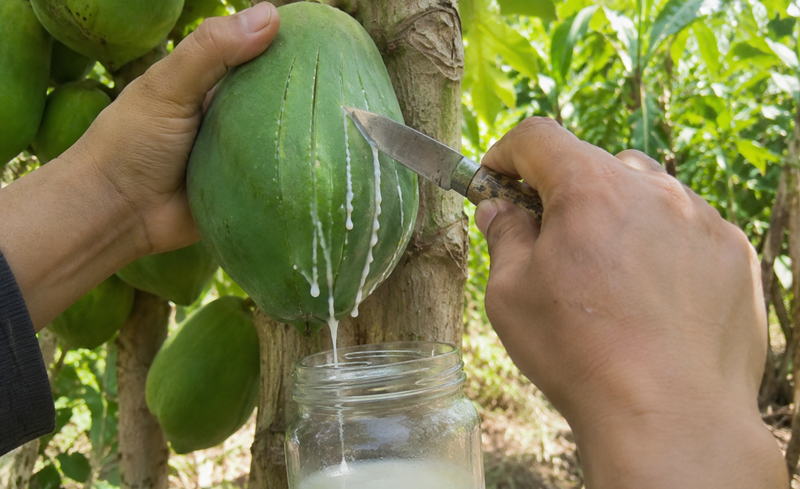
This fascinating substance is called papaya latex, and it contains a valuable natural enzyme known as papain.
For generations, papaya latex has been collected and used in food processing, traditional practices, and commercial products.
But what makes this white sap so interesting, and how is it collected?
1.What Is Papaya Sap?
Papaya sap is a milky latex produced by the papaya tree (Carica papaya), particularly in its unripe green fruits.
It contains several natural compounds, including papain and chymopapain, enzymes that help break down proteins.
These enzymes are responsible for many of the practical applications of papaya latex.
2.How Is Papaya Sap Collected?
Papaya latex is traditionally harvested from mature but still unripe green fruits.
Step-by-Step Collection Method
Choose a green papaya: Select a healthy, fully developed fruit that has not started turning yellow.
Wear protective equipment: Use gloves and eye protection, since fresh latex can irritate skin and eyes.
Prepare a clean container: Place a small glass or stainless-steel container beneath the fruit.
Make shallow cuts: Using a clean, sharp tool, carefully score the fruit’s skin with shallow vertical incisions. Avoid cutting deeply into the flesh.
Collect the latex: Allow the milky sap to drip naturally into the container.
Stop when the flow slows: Avoid repeatedly damaging the same fruit.
Commercial producers often process collected latex promptly under controlled conditions to preserve its enzyme activity.
Important: Fresh papaya latex is not suitable for direct consumption or homemade medicinal preparations. It can cause skin irritation, allergic reactions, and tissue damage.
3.Five Interesting Uses of Papaya Sap
1.Natural Meat Tenderizer
Papain breaks down proteins, which is why purified, food-grade papain is widely used in commercial meat tenderizers.
It can help soften tougher cuts of meat before cooking.
2.Food Processing
Food manufacturers use purified papain in certain processes, including protein modification and beverage clarification.
The enzyme is carefully processed and used in controlled amounts.
3.Digestive Enzyme Products
Papain is sometimes included in commercial digestive enzyme supplements because of its protein-breaking properties.
However, evidence for treating digestive disorders remains limited.
4.Cosmetic Products
Purified papain is used in some exfoliating skincare products.
It helps break down proteins associated with dead surface skin cells.
Never apply raw papaya latex directly to your face or skin, as it may cause irritation or chemical-like burns.
5.Traditional Uses and Scientific Research
Papaya latex has a history of traditional use in various cultures.
Scientists have also investigated papain for applications involving protein breakdown and specialized medical products.
These uses require carefully prepared formulations and should not be confused with applying fresh sap as a home remedy.
4.Important Safety Precautions
Although papaya latex has valuable industrial applications, the raw substance requires caution.
Fresh latex can irritate or damage skin and eyes.
People with latex allergies may experience allergic reactions.
Papain may also cause reactions in people sensitive to papaya.
Pregnant individuals should avoid medicinal use of unripe papaya latex.
Never drink raw papaya sap or use it to treat wounds, skin growths, or digestive conditions.
For cooking or skincare, choose properly formulated, commercially prepared products rather than raw latex.
Papaya is much more than a delicious tropical fruit.
The milky sap found in unripe papayas contains papain, a remarkable enzyme with applications in food processing, cosmetics, and scientific research.
Understanding how papaya latex is collected and processed reveals another fascinating side of this tropical plant.


Add comment