

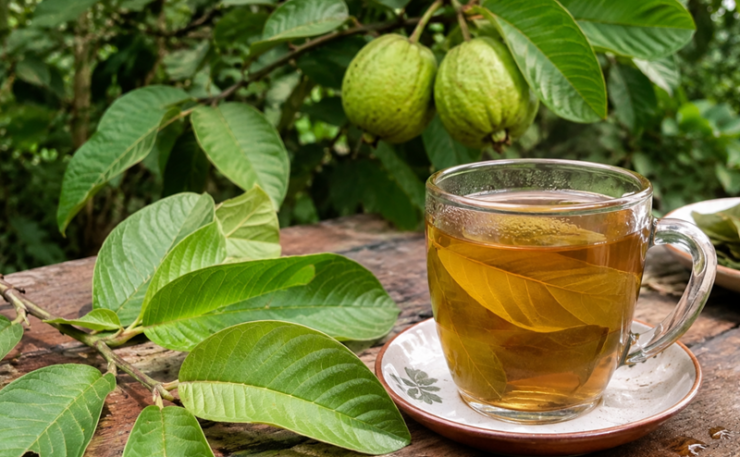
 wawstock
Guava is famous for its delicious tropical fruit, but did you know that its leaves have also been used for generations in traditional herbal remedies?
The leaves of the guava tree (Psidium guajava) contain natural plant compounds that have attracted scientific interest, especially for their potential effects on digestion, blood sugar, and antioxidant activity.
Here’s what makes guava leaf tea interesting and how to prepare it at home.
5 Potential Benefits of Guava Leaf Tea
1.May Support Digestive Health
Guava leaves have traditionally been used to relieve occasional digestive discomfort and diarrhea. Some small clinical studies suggest that certain guava leaf preparations may help with diarrhea, but evidence for homemade tea remains limited.
2.Contains Natural Antioxidants
Guava leaves contain flavonoids, including quercetin, and other polyphenols. These compounds have antioxidant properties, although their effects in the human body require further study.
3.May Help With Blood Sugar Management
Preliminary research suggests that guava leaf extracts or tea may influence blood sugar levels after meals. However, guava tea should never replace prescribed diabetes medication.
4.Traditionally Used for Oral Care
In some cultures, guava leaves have been used in mouth rinses because of their potential antimicrobial properties. More research is needed to establish their effectiveness for dental and gum conditions.
5.Studied for Anti-Inflammatory Properties
Laboratory studies have identified compounds in guava leaves with anti-inflammatory activity. However, there is insufficient clinical evidence to conclude that drinking the tea treats inflammatory diseases.
How to Make Guava Leaf Tea at Home
Ingredients
5–7 fresh, healthy guava leaves
2 cups (500 ml) water
Honey or lemon, optional
Step-by-Step Preparation
Step 1: Collect fresh guava leaves from a healthy tree that hasn’t been treated with pesticides.
Step 2: Wash the leaves thoroughly under running water to remove dust and debris.
Step 3: Bring 2 cups of water to a boil in a small saucepan.
Step 4: Add the guava leaves, reduce the heat, and simmer gently for 5–10 minutes.
Step 5: Remove from the heat, cover, and allow the tea to steep for another 5 minutes.
Step 6: Strain the liquid into a cup. Add a little honey or lemon if desired.
The result is a mild, earthy herbal tea with a slightly astringent flavor.
Other Traditional Uses of Guava Leaves
Besides tea, guava leaves have traditionally been used in:
Herbal mouth rinses
Hair and scalp rinses
Topical herbal preparations
Dried herbal blends
These traditional applications have not all been proven effective in clinical studies.
Important Precautions
Guava leaf tea is not a proven treatment for diabetes, infections, or digestive disorders.
People taking blood-sugar-lowering medication should consult a healthcare professional before using it regularly. Safety information during pregnancy and breastfeeding is limited.
There is no established medically recommended daily dose for homemade guava leaf tea.
Guava leaves are an interesting part of a tropical fruit tree that many people overlook.
Their natural antioxidants, traditional uses, and potential digestive and metabolic effects make them a subject worth exploring.

Add comment