

 wawstock
Don’t throw away your beautiful geraniums when the temperatures start to drop! With a few simple steps, you can keep your geraniums alive throughout winter and turn one healthy plant into several new ones without spending any money.
Geraniums, commonly known as pelargoniums (Pelargonium), are among the most popular flowering plants for balconies, patios, and gardens. Although they’re often treated as annuals in colder climates, many varieties are actually tender perennials that can survive for years when protected from frost.
Here’s how to save them before winter arrives.
1.Bring Your Geraniums Indoors Before the First Frost
Geraniums love sunshine and warmth, but freezing temperatures can damage or kill them.
Before the first frost:
Inspect your plants for pests and diseases.
Remove dead flowers, yellow leaves, and damaged stems.
Move potted geraniums indoors to a bright, cool location.
If your plants are growing in garden beds, carefully dig them up and transplant them into pots.
Ideal winter conditions: A bright location with temperatures around 5–12°C is suitable for many common zonal geraniums, provided they are kept relatively dry.
Avoid placing them near radiators or in dark, overheated rooms.
2.Prune Your Geraniums to Encourage Healthy Growth
Before storing your geraniums for winter, you can trim back long, leggy stems to make the plants more compact.
Remove weak or damaged growth and shorten healthy stems as needed.
Pruning helps reduce the plant’s size and makes it easier to manage indoors.
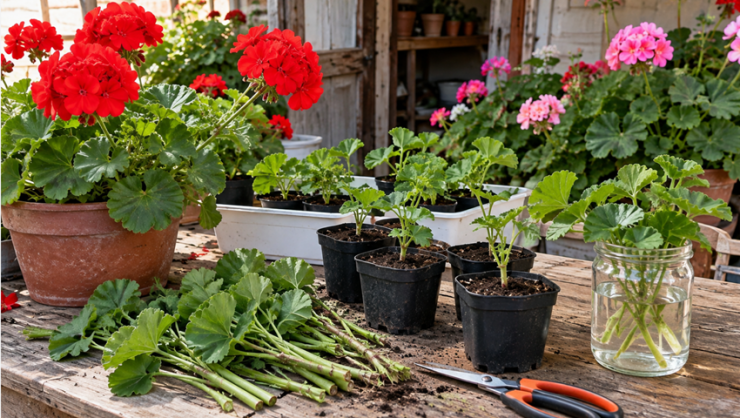
Don’t throw away those healthy cuttings! They can become brand-new geranium plants.
3.Grow New Geraniums from Cuttings for Free
This is one of the easiest ways to multiply your favorite geranium varieties.
What You’ll Need
A healthy geranium plant
Clean, sharp scissors or pruning shears
Small pots with drainage holes
Light, well-draining potting mix
A bright location away from harsh direct sunlight
Step-by-Step Instructions
Step 1:Take healthy cuttings
Choose strong, non-flowering stems and cut pieces approximately 8–12 cm (3–5 inches) long, just below a leaf node.
Step 2:Remove the lower leaves
Keep two or three healthy leaves near the top and remove any flowers or flower buds.
This allows the cutting to focus its energy on developing roots.
Step 3:Prepare the cutting
Allow the cut end to dry briefly before planting, especially if the stem is very succulent.
Step 4:Plant in soil
Insert the lower part of the cutting into slightly moist, well-draining potting mix.
Gently firm the soil around the stem.
Step 5:Place somewhere bright
Keep the cuttings in bright, indirect light at approximately 18–21°C.
Water sparingly, allowing the surface of the mix to dry slightly between waterings. Excess moisture can cause stem rot.
Step 6:Wait for roots to develop
Under favorable conditions, geranium cuttings often develop roots within 2–4 weeks, although some may take longer.
Once you notice healthy new growth and the cutting has established roots, you can gradually introduce it to more sunlight.
4.How to Care for Geraniums During Winter
Overwintering geraniums is surprisingly easy when you understand their needs.
Light: Provide as much natural light as possible.
Water: Reduce watering significantly during cool winter conditions. Water only when the soil has dried sufficiently.
Fertilizer: Avoid heavy feeding while the plants are resting or growing very slowly.
Air circulation: Keep plants in a well-ventilated area to reduce the risk of fungal problems.
Pest control: Check regularly for aphids, whiteflies, and other pests that may appear indoors.
Some yellowing leaves or slower growth during winter is normal.
5.Wake Your Geraniums Up in Spring
As the days become longer and temperatures begin to rise, it’s time to prepare your geraniums for another beautiful flowering season.
Remove dead or weak stems.
Repot plants if their containers are too small or the potting mix has deteriorated.
Gradually increase watering as active growth resumes.
Begin feeding with a balanced fertilizer according to the product instructions.
Move plants outdoors gradually once the danger of frost has passed.
Introduce them to direct sunlight over several days to prevent leaf scorch.
With proper care, your overwintered geraniums can become lush, healthy plants ready to bloom again.
6.Why Propagating Geraniums Is Worth It
Taking cuttings from your existing plants has several advantages:
Save money: Grow new plants without purchasing additional geraniums.
Preserve favorite varieties: Keep the same flower colors and characteristics.
Fill more pots: Decorate balconies, patios, and garden borders.
Share with friends: Give away young plants as thoughtful gardening gifts.
Reduce waste: Make use of healthy stems that would otherwise be discarded during pruning.
Unlike growing from seeds, stem cuttings generally produce plants genetically identical to the parent plant.
7.Common Mistakes to Avoid
Waiting until after a hard frost: Bring your plants inside before freezing temperatures damage them.
Overwatering: Geraniums are particularly vulnerable to root rot when kept too wet during winter.
Keeping cuttings in deep shade: Young plants need sufficient light to establish healthy roots and shoots.
Using unhealthy stems: Always take cuttings from vigorous, disease-free plants.
Moving plants outdoors too early: Cold nights can damage tender new growth.
Geraniums don’t have to be disposable summer flowers. With a little preparation before winter, you can keep your favorite plants alive and enjoy them year after year.
Even better, a few healthy stem cuttings can grow into beautiful new plants, allowing you to fill your garden with colorful flowers without spending extra money.

Add comment