

 wawstock
Cloves may be tiny, but they are one of the most aromatic and powerful spices found in the kitchen. With their warm, sweet, slightly spicy flavor, cloves have been used for centuries in teas, homemade remedies, desserts, sauces, winter drinks and traditional wellness recipes.
The secret behind cloves is their intense aroma and their natural compounds, especially eugenol, which gives cloves their strong smell and many of their traditional uses. Cloves are often combined with honey, ginger, garlic, milk, cinnamon or turmeric to create simple homemade preparations for comfort, digestion, immunity support and general well-being.
Still, cloves should be used with moderation. They are a spice, not a miracle cure, and they should never replace medical treatment.
Cloves are the dried flower buds of the clove tree, known scientifically as Syzygium aromaticum. They are commonly used whole or ground in cooking, tea, spice blends, baked goods and traditional drinks.
Their flavor is strong, so a small amount is usually enough. Just 2–4 whole cloves can give a deep aroma to a cup of tea, a pot of milk or a homemade syrup.
Main Benefits of Cloves
1.Rich in natural antioxidants
Cloves contain plant compounds with antioxidant activity. Antioxidants help protect cells from oxidative stress and are one reason many spices are valued in traditional diets.
This does not mean cloves cure disease, but adding small amounts to food or drinks can be a flavorful way to include more aromatic plant compounds in your daily routine.
2.Traditionally used for throat comfort
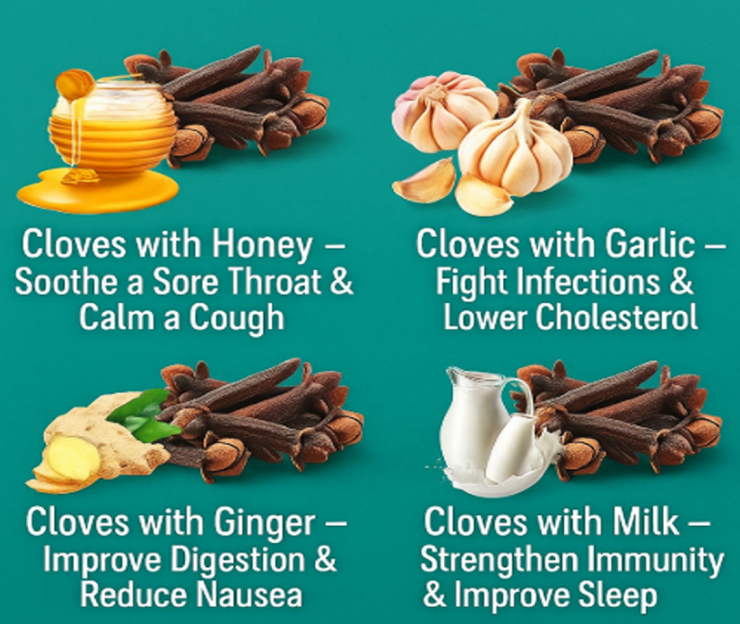
One of the most popular homemade combinations is cloves with honey. Honey can coat the throat, while cloves add warmth and aroma. This mixture is often used traditionally during cold seasons when the throat feels irritated or dry.
A simple preparation can be made by adding a few crushed cloves to a spoon of honey and letting it infuse for a few hours. It can also be added to warm tea.
Important: honey should not be given to children under 1 year old.
3.May support digestion
Cloves are often used in warm teas after meals, especially when combined with ginger. This mix has a strong, warming taste and is traditionally used for stomach comfort, bloating and nausea.
A simple clove and ginger tea can be made with 2–3 cloves, a few slices of fresh ginger and hot water. Let it steep for 5–10 minutes, strain and drink warm.
4.Adds warmth to bedtime drinks
Cloves with warm milk are often used as a comforting evening drink. The cloves give the milk a deep, spiced flavor, while the warm drink itself can become part of a calming nighttime routine.
You can boil 1 cup of milk with 2 cloves for a few minutes, strain it and drink it warm. For extra aroma, add a small pinch of cinnamon or a little honey.
This drink is not a sleeping pill, but it can be a pleasant, caffeine-free option before bed.
5.Cloves with garlic for savory recipes
Cloves and garlic are sometimes combined in traditional recipes, especially in soups, stews, marinades and sauces. Garlic is well known for its strong flavor and is often discussed in relation to heart-friendly diets.
However, the idea that cloves and garlic can “fight infections” or “lower cholesterol” should be understood carefully. They may support a balanced diet, but they do not replace antibiotics, cholesterol medication or medical care.
A safe way to use them is in food: add garlic and 1–2 cloves to soups, broths or slow-cooked dishes for flavor.
6.Cloves with cinnamon for warming teas
Cloves and cinnamon are a classic combination in winter drinks. They are used in teas, compotes, mulled-style non-alcoholic drinks, desserts and oatmeal.
Some people associate cinnamon with blood sugar balance, but the evidence is mixed. For that reason, cloves and cinnamon should be enjoyed as spices, not as a treatment for diabetes.
A simple tea can be made with 2 cloves, a small cinnamon stick and hot water. Let it steep, strain and enjoy.
7.Cloves with turmeric for a golden wellness drink
Cloves and turmeric can be used together in warm drinks, soups or golden milk. Turmeric is often associated with joint comfort and inflammation support, while cloves add warmth and depth.
A simple golden drink can be made with milk or plant-based milk, a pinch of turmeric, 2 cloves and a small amount of honey. Simmer gently, strain and drink warm.
This is best used as a comforting drink, not as a replacement for pain medication or treatment for joint disease.
Easy Homemade Clove Recipes
Clove and honey throat mixture
Crush 3–4 cloves lightly and mix them with 2 tablespoons of honey. Let the mixture sit for a few hours, then remove the cloves if desired. Use a small amount in warm tea or take a small spoonful occasionally.
Do not give honey to children under 1 year old.
Clove and ginger tea
Add 2–3 cloves and 3–4 slices of fresh ginger to a cup of hot water. Cover and steep for 10 minutes. Strain and drink warm.
Clove milk
Add 2 cloves to 1 cup of milk and warm gently for 5 minutes. Strain before drinking. Add honey only after the milk has cooled slightly.
Clove and cinnamon tea
Add 2 cloves and half a cinnamon stick to hot water. Steep for 5–10 minutes. This makes a warming drink for cold days.
Clove and turmeric golden drink
Warm 1 cup of milk with 2 cloves and a pinch of turmeric. Simmer gently, strain and sweeten lightly if desired.
For normal culinary use, small amounts are usually enough. A few whole cloves in tea or food are very different from concentrated clove oil or high-dose supplements.
Do not drink clove oil. Do not apply undiluted clove oil directly to the skin, gums or mouth, because it may cause irritation or burns. Clove oil is much stronger than whole cloves and can be dangerous in high amounts.
Who Should Be Careful?
Use cloves with caution if you:
take blood-thinning medication;
have liver disease;
have diabetes or take blood sugar medication;
are pregnant or breastfeeding;
are preparing for surgery;
have allergies to cloves or eugenol;
want to use clove oil on children.
Children should not be given clove oil, and adults should avoid using concentrated clove preparations without medical advice.
Cloves are small, but they bring powerful aroma, warmth and traditional value to the kitchen. Whether combined with honey, ginger, garlic, milk, cinnamon or turmeric, cloves can be used in simple homemade recipes for comfort and flavor.
The best way to use cloves is wisely: small amounts, food-grade quality and realistic expectations. They can support a natural lifestyle, but they are not a cure for infections, diabetes, cholesterol problems, joint disease or serious medical conditions.
Used correctly, cloves are one of the most valuable spices you can keep at home — tiny, fragrant and full of traditional charm.
This article is for educational purposes only and does not replace medical advice, diagnosis or treatment.

Add comment