

 wawstock
Don’t let the cold weather destroy your beautiful coleus plants! Those colorful leaves that brightened your garden all summer can be enjoyed again next year — and you don’t need to spend money buying new plants.
Coleus (Coleus scutellarioides) is famous for its spectacular foliage in shades of red, pink, purple, yellow, and green. Although often grown as an annual, coleus is actually a tender perennial that can survive for years when protected from freezing temperatures.
The best part? You can grow several new coleus plants from just one healthy parent plant using simple stem cuttings.
Here’s how to save your coleus before winter arrives.
1.Bring Your Coleus Indoors Before the First Frost
Coleus loves warm temperatures and cannot tolerate frost.
As autumn temperatures begin to drop, it’s important to protect your plants before cold weather damages their leaves and stems.
Move potted coleus indoors before the first frost.
Inspect the leaves carefully for aphids, whiteflies, and spider mites.
Remove damaged or yellowing foliage.
Place the plants near a bright window with plenty of indirect sunlight.
Keep them away from cold drafts and heating vents.
Ideal indoor temperatures: Approximately 18–24°C (65–75°F).
If your coleus is growing directly in the garden, you can either dig it up and pot it or take cuttings to grow new plants indoors.
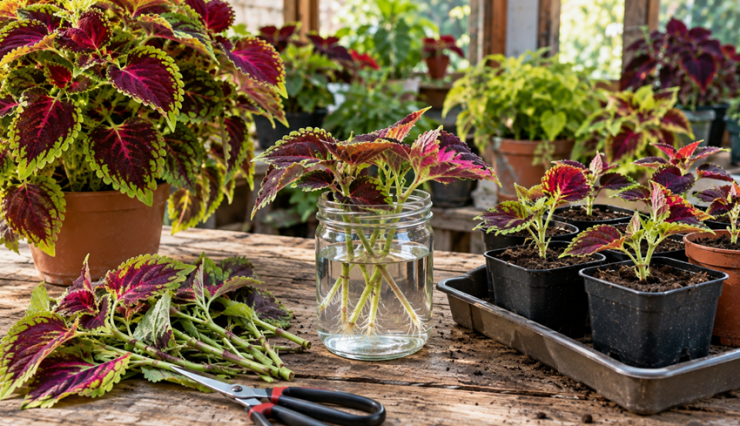
2.The Easiest Way to Propagate Coleus from Cuttings
Coleus is one of the easiest ornamental plants to propagate, making it perfect for beginner gardeners.
What You’ll Need
A healthy coleus plant
Clean, sharp scissors
A glass or jar of water
Small pots
Well-draining potting mix
Step-by-Step Instructions
Step 1: Choose a healthy stem
Select a strong, non-flowering stem approximately 10–15 cm (4–6 inches) long.
Step 2: Cut below a leaf node
Using clean scissors, make a cut just below a leaf node — the point where leaves emerge from the stem.
Step 3: Remove the lower leaves
Remove the leaves from the bottom half of the cutting, leaving two or three pairs near the top.
Step 4: Place the cutting in water
Put the stem in a glass of clean water, ensuring at least one or two leaf nodes are submerged.
Keep the remaining leaves above the waterline.
Step 5: Place in bright, indirect light
Position the glass near a bright window, away from harsh direct sunlight.
Change the water every few days to keep it fresh.
Step 6: Watch the roots develop
Under favorable conditions, tiny white roots may begin appearing within 7–14 days.
Allow the roots to grow approximately 2–5 cm (1–2 inches) before transplanting.
Step 7: Transfer to soil
Plant the rooted cutting in a small pot filled with lightly moist, well-draining potting mix.
Water gently and keep the plant in bright, indirect light while it adjusts.
Within a few weeks, your cutting can begin developing into a beautiful new coleus plant!
3.Can You Propagate Coleus Directly in Soil?
Absolutely!
If you prefer not to root your cuttings in water, you can plant them directly into moist potting mix.
Take a healthy stem cutting.
Remove the lower leaves.
Insert the stem into a small pot of moist, well-draining soil.
Keep it warm and in bright, indirect light.
Maintain light moisture without soaking the soil.
Roots often develop within approximately 2–3 weeks, although conditions can affect the timing.
This method eliminates the need to transfer water-grown roots into soil later.
4.How to Keep Coleus Healthy Throughout Winter
Once your coleus plants are indoors, their needs will change.
Light: Provide bright, indirect light. A grow light can help if winter days are very short.
Watering: Water when the upper layer of soil begins to dry. Avoid leaving the roots constantly wet.
Temperature: Keep plants in a warm room, ideally above 15°C (59°F).
Fertilizer: Reduce feeding during winter when growth slows. Resume regular fertilizing when active growth returns.
Pruning: Pinch off growing tips occasionally to encourage bushier plants.
Flowers: Remove flower spikes if you want the plant to focus on producing colorful foliage.
Coleus may grow more slowly during winter, but healthy plants can recover quickly when spring arrives.
5.The Secret to Growing Bushy, Colorful Coleus
One of the most useful tricks for growing beautiful coleus is regular pinching.
When a young plant develops several pairs of leaves, gently remove the growing tip just above a leaf node.
This encourages side shoots to develop, helping the plant become fuller and more compact instead of tall and leggy.
You can also use the removed tips as new cuttings!
With regular care, a single coleus plant can provide enough cuttings to fill several pots.
6.When Can You Move Coleus Back Outdoors?
In spring, wait until all danger of frost has passed and nighttime temperatures are consistently above approximately 13–15°C (55–59°F).
Before moving your plants permanently outdoors, gradually introduce them to outdoor conditions over 7–10 days.
Start with a sheltered, shaded location and slowly increase their exposure to brighter light.
This process, called hardening off, helps prevent leaf scorch and temperature stress.
7.Common Coleus Propagation Mistakes to Avoid
Taking cuttings from unhealthy plants: Always choose vigorous stems without signs of disease or pests.
Submerging leaves in water: Leaves left underwater can rot and encourage bacterial growth.
Too much direct sunlight: Strong sunlight can cause wilting, especially before roots develop.
Cold indoor temperatures: Coleus needs warmth to grow and root successfully.
Overwatering: Constantly saturated soil can lead to root rot.
Forgetting to pinch the tips: Without occasional pruning, coleus may become tall and sparse.
Why Saving Coleus Is Worth It
Propagating coleus offers several wonderful advantages:
Save money: Grow new plants without buying replacements every spring.
Preserve your favorite colors: Stem cuttings usually maintain the same foliage characteristics as the parent plant.
Create more plants: One healthy coleus can produce multiple cuttings.
Decorate your home: Enjoy colorful foliage indoors during winter.
Share with friends: Give away rooted cuttings as beautiful, inexpensive gifts.
Coleus doesn’t have to disappear from your garden when autumn arrives.
With a pair of scissors, a glass of water, and a little patience, you can transform a few healthy stems into brand-new plants that will brighten your home throughout winter.
When spring returns, those small cuttings can grow into lush, colorful coleus plants ready to decorate your garden, patio, or balcony.

Add comment