

 wawstock
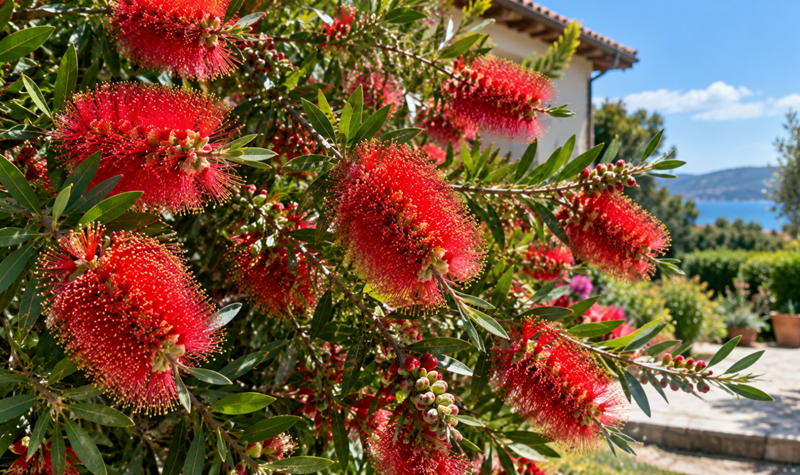
Imagine a garden filled with bright red flowers that look exactly like miniature bottle brushes! That’s the beauty of Callistemon, commonly known as the Bottlebrush plant.
Native to Australia, this fascinating evergreen shrub is loved for its unusual flowers, attractive foliage, and ability to attract bees, butterflies, and nectar-feeding birds.
With the right care, Bottlebrush plants can become spectacular additions to gardens, patios, and sunny balconies.
1.What Is the Callistemon Plant?
Callistemon is a group of Australian flowering plants traditionally classified under the genus Callistemon, although many species are now botanically included in the genus Melaleuca.
Their most distinctive feature is their unusual cylindrical flower spikes, which resemble the brushes used to clean bottles.
Depending on the variety, flowers can appear in several beautiful colors:
Bright red: The most popular and recognizable color.
Pink: A softer, delicate option for ornamental gardens.
White: Elegant flowers that stand out against green foliage.
Yellow: An unusual and attractive variation.
Many varieties bloom during spring and summer, with some producing additional flowers during warmer months.
2.Why Gardeners Love Bottlebrush Plants
Callistemon isn’t just beautiful — it also offers several benefits for outdoor spaces.
Attracts pollinators: Its nectar-rich flowers attract bees, butterflies, and nectar-feeding birds.
Evergreen foliage: Many varieties keep their leaves throughout the year in suitable climates.
Drought tolerance: Once established, many Bottlebrush plants tolerate relatively dry conditions.
Versatile landscaping: They can be grown as ornamental shrubs, small trees, hedges, or container plants.
Unique flowers: Their unusual appearance makes them an eye-catching feature in any garden.
3.How to Grow Callistemon Successfully
Bottlebrush plants are relatively easy to grow when their basic needs are met.
Sunlight: Choose a location receiving at least 6 hours of direct sunlight daily. More sunshine generally encourages better flowering.
Soil: Use well-draining soil. Many varieties tolerate different soil types but dislike prolonged waterlogging.
Watering: Water regularly during the first growing season. Established plants often need less frequent watering.
Temperature: Most varieties prefer warm climates and can suffer damage during severe frost.
Fertilizer: Apply a suitable slow-release fertilizer during the growing season if needed. Avoid excessive feeding.
Gardening tip: In regions with cold winters, grow Callistemon in a large container so it can be moved to a bright, frost-free location during winter.
4.How to Prune Bottlebrush Plants
Pruning helps maintain a compact shape and encourages healthy new growth.
The best time to prune is generally after the main flowering period.
Follow these simple steps:
Remove dead, damaged, or diseased branches.
Lightly trim the tips of long stems.
Remove faded flower spikes if desired.
Avoid cutting heavily into old, leafless wood.
Regular light pruning can help produce a fuller, more attractive shrub.
5.How to Propagate Callistemon from Cuttings
Want more Bottlebrush plants without buying them? You can try propagating them from stem cuttings!
Step-by-Step Method
Step 1: Select a healthy, non-flowering stem approximately 10–15 cm (4–6 inches) long.
Step 2: Cut just below a leaf node using clean pruning shears.
Step 3: Remove the leaves from the lower half of the cutting.
Step 4: Dip the cut end in rooting hormone if available.
Step 5: Plant the cutting in a pot containing moist, well-draining propagation mix.
Step 6: Keep it in a warm location with bright, indirect light.
Maintain gentle moisture without soaking the soil.
Roots may develop within several weeks, although some varieties take longer.
Once the cutting has established a healthy root system, transplant it into a larger pot.
6.Can You Grow Bottlebrush Plants in Pots?
Absolutely! Compact Callistemon varieties are excellent choices for container gardening.
Choose a large pot with drainage holes and fill it with well-draining potting mix.
Place the container in a sunny location and water when the upper layer of soil begins to dry.
Container-grown plants generally require more frequent watering than those growing directly in the garden.
During winter, protect the plant from freezing temperatures.
7.Common Mistakes to Avoid
Too little sunlight: Insufficient light can reduce flowering.
Overwatering: Constantly wet soil may cause root problems.
Heavy pruning at the wrong time: Cutting back too much can remove developing flower buds.
Ignoring frost protection: Many varieties are sensitive to freezing temperatures.
Poor drainage: Healthy roots are essential for strong growth and abundant flowers.
Callistemon is one of the most unusual and beautiful flowering shrubs you can grow.
Its spectacular bottlebrush-shaped flowers, evergreen foliage, and ability to attract pollinators make it a wonderful choice for ornamental gardens.
Whether planted as a flowering hedge, grown as a small tree, or displayed in a large container, this Australian beauty can bring an exotic touch to your outdoor space.

Add comment