

 wawstock
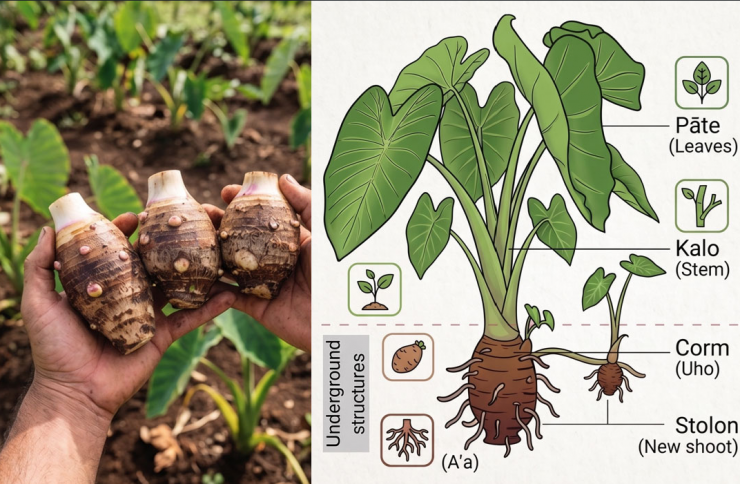
Taro (Colocasia esculenta) has been cultivated as food for thousands of years and remains an important staple in many tropical regions. Beneath its rough brown exterior is a starchy root—or more precisely, a corm—with a mild, slightly nutty flavor.
But taro offers much more than carbohydrates. Here’s what makes it interesting.
1.A Good Source of Fiber
Taro provides dietary fiber, which supports normal digestion and helps make meals more satisfying.
Its starch also makes it an excellent alternative to potatoes, rice, and other carbohydrate-rich foods.
2.Contains Resistant Starch
Some of the starch in taro can behave as resistant starch, meaning it isn’t completely digested in the small intestine.
Resistant starch can reach the large intestine, where it may act as a substrate for beneficial gut bacteria.
The amount varies considerably depending on how taro is cooked and prepared.
3.Provides Important Minerals
Taro contains nutrients including potassium, manganese, magnesium, and copper, as well as smaller amounts of several other vitamins and minerals.
Potassium is particularly important for normal muscle and nerve function and contributes to maintaining normal blood pressure.
4.Contains Antioxidant Plant Compounds
Taro also provides naturally occurring plant compounds, including polyphenols.
Purple varieties contain pigments that give the flesh its distinctive appearance and contribute additional antioxidant compounds.
5.Surprisingly Versatile in the Kitchen
Taro can be prepared in many different ways.
Once properly cooked, it can be:
Boiled and mashed
Roasted or baked
Added to soups and stews
Made into taro chips
Used in curries
Added to desserts
Used in drinks and bubble tea
Its mild flavor allows it to work in both savory and sweet recipes.
Important: Never Eat Taro Raw
This is one thing everyone should know before preparing taro.
Raw or undercooked taro contains calcium oxalate crystals, which can cause intense irritation and burning in the mouth and throat.
Taro should therefore always be peeled and thoroughly cooked before eating. People who need to limit oxalates for medical reasons should also seek appropriate dietary advice.
What About Taro Leaves?
In many cuisines, taro leaves are also eaten—but, like the corm, they require proper cooking because they contain calcium oxalate.
Never assume that raw taro leaves are safe simply because they are traditionally consumed after preparation.
Taro isn’t just another unusual root vegetable.
It’s a fiber-rich, versatile staple food that provides resistant starch, potassium and other nutrients, while fitting into everything from soups and curries to desserts.



Add comment