

 wawstock
Most gardeners know yellow nutsedge (Cyperus esculentus) as a stubborn plant that keeps returning even after being pulled. But beneath the soil, this persistent sedge produces small underground tubers known as tiger nuts—and they’ve been eaten by people for centuries.
Here’s why this common “weed” deserves a second look.
- Those Underground Tubers Are Edible
Yellow nutsedge develops small brown tubers around its underground stems. These are the famous tiger nuts, also called chufa.
Despite the name, they aren’t actually nuts. They’re tubers with a naturally sweet, slightly nutty flavor.
They can be eaten raw when properly prepared, soaked to soften them, roasted, or ground into flour.
- Tiger Nuts Are Rich in Fiber
One of their most interesting nutritional characteristics is their high fiber content, which can contribute to normal digestive function and help make them filling.
They also contain resistant starch, although amounts can vary depending on processing and preparation.
- They Contain Healthy Fats
Tiger nuts contain substantial amounts of fat, with oleic acid being one of their prominent fatty acids—the same type of monounsaturated fat commonly associated with olive oil.
They also provide carbohydrates, vitamin E, and minerals such as magnesium and phosphorus.
- They’re Used to Make a Famous Drink
In Spain, particularly around Valencia, tiger nuts are used to prepare horchata de chufa.
The tubers are soaked, ground with water, and strained to create a creamy, refreshing drink that has been enjoyed for generations.
- It’s an Incredibly Persistent Plant
If you’ve ever tried removing yellow nutsedge from a garden, you already know how resilient it can be.
Simply pulling the visible leaves often doesn’t eliminate it because underground tubers can remain in the soil and produce new plants.
This survival strategy makes yellow nutsedge a troublesome weed in many gardens—but also helps explain how effectively it reproduces.
How to Recognize Yellow Nutsedge
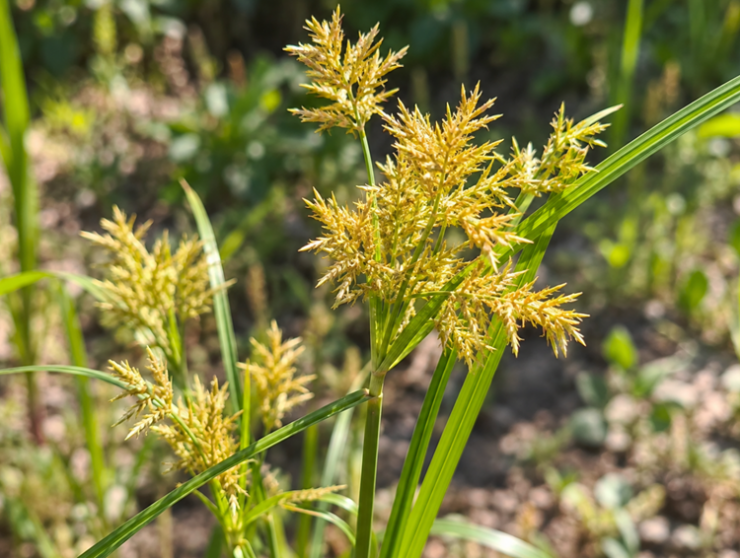
Unlike true grasses, yellow nutsedge typically has a triangular stem, narrow yellow-green leaves, and distinctive yellowish-brown flower clusters.
Correct identification matters because not every grass-like plant produces edible tubers.
Never eat wild-harvested tubers unless you’re completely certain of the plant’s identity, and avoid harvesting from roadsides, chemically treated lawns, or contaminated soil.
Cyperus esculentus is a perfect example of how one person’s weed can be another person’s food crop.
Gardeners may battle it because of its persistent underground tubers, while elsewhere those very same tubers are deliberately cultivated, harvested, and eaten.
So if yellow nutsedge appears in your garden, don’t underestimate what’s hiding beneath the soil.
Those tiny underground “nuts” have been valued as food for centuries—and today we know them as tiger nuts.

Add comment