

 wawstock
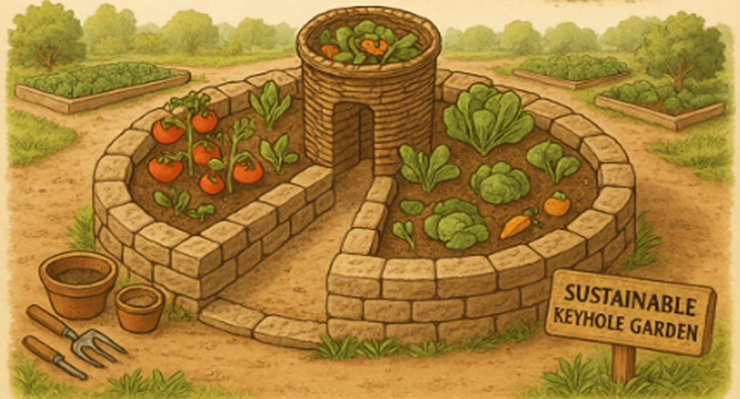
A Keyhole Garden showcases one of the most ingenious garden designs ever created: the keyhole garden. Born out of necessity in regions facing drought and poor soil conditions, this circular raised-bed system blends smart engineering, sustainability, and efficient food production—all in one compact space.
This unique structure is shaped like a keyhole, with a central compost basket that feeds the surrounding soil, making it one of the most self-sustaining garden systems available.
A keyhole garden is a circular raised bed (usually 6 feet across) with a small wedge-shaped path that allows you to walk into the center—this creates the characteristic “keyhole” shape.
At the heart of the garden lies a vertical compost basket, where kitchen scraps, leaves, and water are added.
The compost basket slowly releases nutrients.
Water trickles down through organic layers.
Moisture and fertility naturally spread throughout the bed.
Plants receive a steady supply of nourishment with minimal effort.
This design turns a small space into a highly productive, low-maintenance growing system.
How Keyhole Gardens Work (Step-by-Step According to the Image)
1.Cardboard & Newspaper Base
The bottom layer prevents weeds from growing while helping retain moisture.
2.Twigs and Branches
They create airflow and drainage, preventing waterlogging.
3.Manure and Organic Matter
Adds fertility to the deeper layers.
4.Compost Layer
A rich, nutrient-dense soil layer where the plants thrive.
5.Central Compost Basket
This is the genius of the design:
You add kitchen scraps, compost, and water into the basket, and nutrients flow outward into the planting soil.
The picture clearly shows how moisture spreads through the layers—an elegant, natural irrigation system.
Benefits of a Keyhole Garden
1.Uses Minimal Water
The central compost basket acts as an irrigation system, making it ideal for drought areas.
2.Self-Fertilizing System
As compost breaks down, it feeds the plants continuously.
3.Grows a Ton of Food in a Small Space
Perfect for vegetables, herbs, and leafy greens.
4.Recycles Household Waste
Kitchen scraps turn into nutrient-rich soil—nothing goes to waste.
5.Sustainable & Eco-Friendly
Built using stones, cardboard, branches, and organic matter, it supports regenerative gardening.
6.Easy to Maintain
You can water and compost from one spot—the central basket.
How to Build One
Create a circular raised bed using stone, bricks, or soil.
Add a path wedge so you can access the center.
Place a wire basket or woven cylinder in the middle.
Layer materials from bottom to top:
Cardboard
Twigs and branches
Manure or kitchen scraps
Compost
Planting soil
Plant your vegetables around the circle.
Add kitchen scraps and water through the compost basket regularly.
In just a short time, you’ll have a thriving, sustainable food garden.
What Can You Grow in a Keyhole Garden?
Lettuce,Spinach,Kale,Beans,Tomatoes,Peppers,Herbs (parsley, cilantro, basil),Carrots,Onions
Why Keyhole Gardens Are Perfect for Modern Living
Even if you live in a dry region, have poor soil, or only a small yard, this garden design excels. It embodies sustainable living, making it easier than ever to grow fresh food while reducing waste.
The Keyhole Garden is more than just a gardening method—it’s a solution.
A solution for food scarcity, water conservation, recycling, and sustainable living.

Add comment