

 wawstock
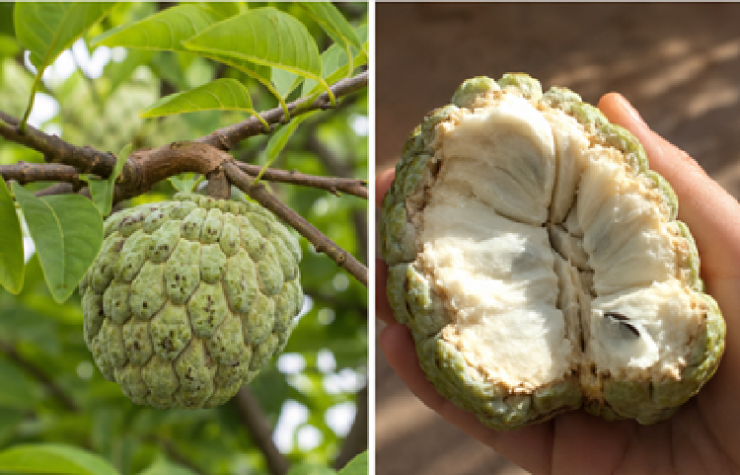
With its unusual scaly green skin and creamy, custard-like flesh, Sugar Apple (Annona squamosa) is one of those fruits you never forget after trying it. Also known as sweetsop, custard apple, or sweet apple, this tropical fruit is appreciated not only for its delicious flavor but also for its interesting nutritional profile and long history of traditional use.
Native to tropical regions of the Americas and now cultivated throughout Asia, Africa, the Caribbean, and other warm climates, sugar apple has become a treasured backyard fruit tree in many parts of the world.
Sugar apple is the fruit of Annona squamosa, a small tropical tree belonging to the Annonaceae family.
The fruit has a distinctive segmented exterior that resembles overlapping green scales. When ripe, those segments begin to separate slightly, revealing soft, fragrant white or cream-colored flesh inside.
Its flavor is intensely sweet and often described as a combination of vanilla, pear, pineapple, and creamy custard.
Inside the flesh are numerous hard, shiny black or dark-brown seeds. These seeds should not be eaten.
1.Naturally Rich in Vitamin C
One of sugar apple’s nutritional highlights is vitamin C.
Vitamin C contributes to normal immune function, collagen formation, wound healing, and protection of cells against oxidative stress.
Eating fruits naturally containing vitamin C is an easy way to increase the variety of antioxidants in your diet.
2.Provides Dietary Fiber
Sugar apple also provides dietary fiber.
Fiber supports normal digestive function and can contribute to regular bowel movements. It can also help make meals and snacks more satisfying.
Because the fruit is naturally sweet, however, portion size can matter—especially for people who need to carefully manage their carbohydrate or sugar intake.
3.Contains Natural Antioxidants
Sugar apple contains several plant compounds with antioxidant activity.
Researchers have investigated Annona squamosa for compounds including phenolics, flavonoids, and other phytochemicals. Antioxidants are interesting because they help protect cells against oxidative damage caused by free radicals.
This doesn’t make sugar apple a medicine, but it does add another reason to appreciate it as part of a varied diet.
4.Provides Important Minerals
The fruit contains several minerals, including potassium and magnesium, alongside smaller quantities of other micronutrients.
Potassium contributes to normal muscle and nervous-system function and helps maintain normal blood pressure.
Magnesium is involved in numerous processes throughout the body, including energy metabolism and normal muscle function.
5.A Naturally Energy-Dense Tropical Fruit
Sugar apple contains naturally occurring carbohydrates and sugars, making it a relatively energy-rich fruit.
This can make it an enjoyable option when you need something naturally sweet and filling.
Instead of highly processed desserts, ripe sugar apple can satisfy a sweet craving while also providing fiber, vitamins, minerals, and plant compounds.
6.Traditional Uses of Annona squamosa
The story of Annona squamosa goes beyond its fruit.
In various traditional practices, different parts of the plant—including the leaves, bark, roots, and seeds—have historically been prepared for different purposes.
Researchers have investigated extracts from the plant for potential:
Antioxidant activity
Antimicrobial activity
Anti-inflammatory activity
Effects on glucose metabolism
Insecticidal properties
However, an important distinction must be made: traditional use and laboratory research do not prove that these preparations are safe or effective treatments in humans.
Some parts of the plant can also contain biologically active or potentially harmful compounds, so homemade medicinal preparations should not be consumed simply because they are described as “natural.”
7.How to Know When a Sugar Apple Is Ripe
Don’t judge this fruit by color alone.
A ripe sugar apple generally becomes slightly soft when gently pressed, and the individual segments of its skin may begin to separate.
It may also develop a stronger, sweet aroma.
If the fruit is completely hard, leave it at room temperature until it softens. Once ripe, it should be eaten relatively quickly because its delicate flesh does not keep for long.
8.How to Eat Sugar Apple
Eating one is incredibly simple.
Break or cut the ripe fruit open and scoop out the creamy flesh with a spoon.
You can eat it fresh or use the pulp in:
Smoothies
Fruit bowls
Desserts
Yogurt
Homemade frozen treats
Tropical drinks
Just remember to remove and discard every seed.
The shiny black seeds inside sugar apple are not edible and should never be chewed or consumed.
They contain potent plant compounds and have traditionally even been investigated or used for insecticidal purposes.
Avoid crushing the seeds for homemade remedies, and be particularly careful that children do not accidentally eat them.
The safest edible portion is the ripe flesh after the seeds have been completely removed.
Sugar Apple vs. Custard Apple: Are They the Same?
The names can become confusing.
Annona squamosa is commonly called sugar apple or sweetsop, but the term “custard apple” is used differently depending on the country. It may refer to sugar apple or to other closely related Annona fruits.
That is why the botanical name Annona squamosa is the easiest way to identify exactly which plant you’re talking about.
Sugar apple proves that some of nature’s strangest-looking fruits can hide something extraordinary inside.
Behind its bumpy green exterior is fragrant, creamy flesh with an intensely sweet tropical flavor, along with vitamin C, fiber, minerals, and naturally occurring plant compounds.
Enjoy the ripe flesh as food, always discard the seeds, and treat medicinal claims involving the leaves, seeds, bark, or roots with appropriate caution.
If you ever find Annona squamosa at a tropical fruit market, don’t let its unusual appearance put you off.
Crack it open, remove the seeds, grab a spoon—and you’ll understand why this remarkable fruit is loved around the world.

Add comment