

 wawstock
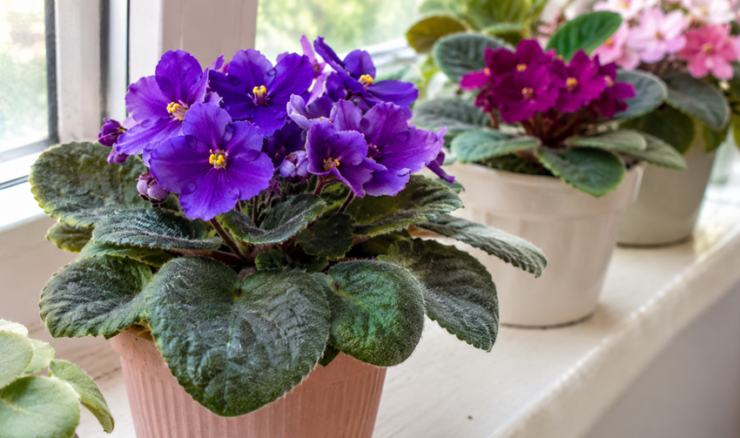
African violets (Saintpaulia, now classified as Streptocarpus) are among the most beautiful indoor flowering plants. Their velvety leaves and delicate purple, pink, white, or blue flowers can brighten any windowsill.
But sometimes, even a healthy-looking African violet refuses to bloom.
The good news? With the right light, watering routine, and a few simple care tricks, your African violet can produce beautiful flowers repeatedly throughout the year!
1.Give It Bright, Indirect Light
Light is one of the most important factors for flowering.
Place your African violet near an east-facing window or another location with plenty of indirect sunlight.
Avoid strong afternoon sun, which can burn the leaves.
Secret: If your plant produces plenty of leaves but no flowers, insufficient light may be the problem.
2.Water Carefully — Never Overwater
African violets prefer slightly moist soil, not constantly wet roots.
Water when the top layer of soil feels slightly dry.
Use room-temperature water and avoid leaving the pot standing in water.
Bottom watering is a good option: place the pot in a shallow tray of water for 15–20 minutes, then allow it to drain completely.
3.Use the Right Fertilizer
African violets benefit from regular, gentle feeding during active growth.
Choose a balanced fertilizer formulated for African violets and follow the manufacturer’s dilution instructions.
Important: More fertilizer doesn’t mean more flowers. Overfertilizing can damage roots and prevent healthy growth.
Avoid sprinkling Epsom salt directly onto the soil. It isn’t a proven flowering trick and should only be used when magnesium deficiency is confirmed.
4.Keep the Pot Slightly Snug
African violets often flower best when their roots are comfortably contained.
Choose a pot approximately one-third the diameter of the plant’s leaf spread.
Oversized pots hold excess moisture and can increase the risk of root rot.
Always use a container with drainage holes.
5.Maintain a Comfortable Temperature
African violets grow best at approximately 18–24°C (65–75°F).
Keep them away from cold drafts, radiators, and sudden temperature changes.
Consistent indoor conditions encourage healthier growth and more reliable flowering.
6.Remove Old Flowers and Damaged Leaves
Regularly remove faded flowers and yellowing leaves.
This keeps the plant tidy and helps direct its resources toward healthy new growth.
Use clean scissors or gently remove spent flower stems at their base.
7.Choose Light, Well-Draining Soil
Ordinary garden soil is usually too dense for African violets.
Use a lightweight African violet potting mix containing ingredients such as peat or coir and perlite.
Good drainage allows the roots to breathe and reduces the risk of overwatering.
8.Try the Gentle Rotation Trick
African violets naturally grow toward the light.
Rotate the pot about a quarter turn every week to encourage balanced growth.
A symmetrical plant receives more even light, helping it develop healthy foliage and flower buds.
Why Is Your African Violet Not Blooming?
If your plant looks healthy but produces no flowers, check these common problems:
Too little light: Move it to a brighter location without direct afternoon sunlight.
Too much fertilizer: Reduce feeding and avoid excess nitrogen.
Incorrect watering: Let the surface of the soil dry slightly between waterings.
Cold temperatures: Keep the plant in a consistently warm room.
An oversized pot: Consider a smaller container if the soil stays wet for too long.
With proper conditions, many African violets can bloom several times a year, and some flower almost continuously.
African violets don’t need expensive products or complicated gardening techniques to look beautiful.
The real secrets are bright indirect light, careful watering, gentle fertilizing, good drainage, and consistent temperatures.
With a little attention, these charming houseplants can reward you with colorful flowers throughout much of the year.


Add comment