

 wawstock
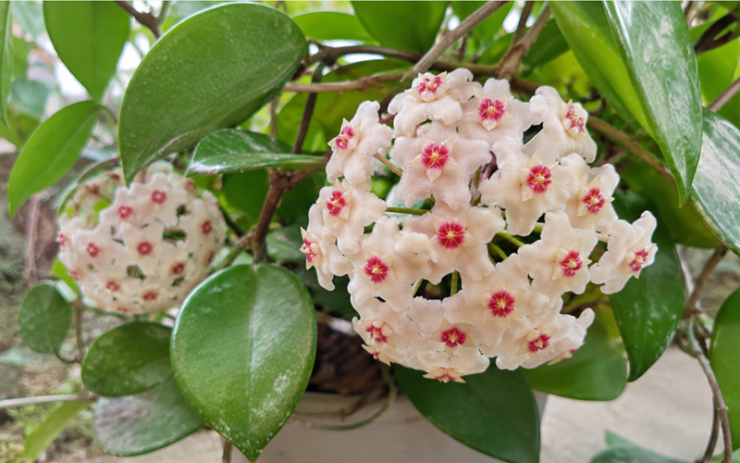
Meet the Hoya, also known as the Wax Plant — a beautiful tropical houseplant famous for its thick, glossy leaves and clusters of delicate, fragrant flowers.
Some Hoya varieties produce creamy-white flowers with pink or red centers, while others bloom in shades of yellow, pink, or deep red.
But here’s the secret: A Hoya can grow beautiful leaves for years without producing a single flower if its growing conditions aren’t quite right!
Here are eight simple tips to encourage your Hoya to bloom.
1.Give Your Hoya Plenty of Bright Light
Light is one of the most important factors for flowering.
Place your Hoya near an east- or west-facing window where it receives plenty of bright, indirect sunlight.
Some gentle morning sun can encourage flowering, but harsh afternoon sunlight may damage the leaves.
Flowering secret: If your Hoya grows long vines but never blooms, it may need more light.
2.Don’t Overwater Your Hoya
Hoyas have thick leaves that store moisture, making them more tolerant of occasional dryness than many tropical houseplants.
Water when the upper portion of the potting mix has dried out.
Always allow excess water to drain away.
Constantly wet soil can cause root rot and prevent healthy growth.
3.Keep the Pot Slightly Snug
Many Hoyas grow well in relatively small containers.
A pot that’s too large may retain excess moisture around the roots.
Repot only when necessary, choosing a container just slightly larger than the previous one.
4.Never Cut Off the Old Flower Spurs!
This is one of the most important Hoya flowering secrets.
Hoyas produce flowers from small structures called peduncles, often referred to as flower spurs.
Many species bloom repeatedly from the same peduncles.
Never remove these short flower stems after the flowers fade!
Cutting them off can remove future flowering sites.
5.Use a Light, Well-Draining Potting Mix
Hoyas need good airflow around their roots.
A suitable potting mix may include:
Orchid bark
Perlite
Coco coir or a little potting soil
This combination helps prevent waterlogging while retaining some moisture.
6.Feed Your Hoya During Active Growth
Use a balanced houseplant fertilizer diluted according to the product instructions during spring and summer.
Avoid excessive fertilizer, especially high-nitrogen feeding, which can encourage leafy growth without improving flowering.
Remember: Fertilizer supports healthy growth, but adequate light and plant maturity are usually more important for blooms.
7.Provide Warm Temperatures and Moderate Humidity
Most commonly grown Hoyas prefer temperatures around 18–27°C (65–80°F).
They also appreciate moderate humidity, especially during active growth.
Keep plants away from cold drafts and sudden temperature changes.
A stable environment helps support healthy flower development.
8.Be Patient and Avoid Moving Flowering Plants
Some Hoyas bloom while relatively young, while others need several years to reach maturity.
Once flower buds appear, avoid unnecessary changes in light, temperature, and watering.
You should also avoid repeatedly moving or rotating the plant, especially if buds are developing.
Sudden environmental changes can sometimes cause buds to drop.
Why Is Your Hoya Not Flowering?
If your plant looks healthy but refuses to bloom, the most common reasons include:
Insufficient light
An immature plant
Excessive watering
Too much fertilizer
Removing old flower peduncles
Sudden changes in growing conditions
Different Hoya species have different flowering requirements, so identifying your particular variety can also help.
Hoyas are among the most rewarding flowering houseplants, especially when their beautiful clusters of waxy, star-shaped flowers finally appear.
With bright indirect light, careful watering, good drainage, and a little patience, many varieties can reward you with spectacular, sometimes wonderfully fragrant blooms.


Add comment